

Travel to Angola
 3 photos
Angola is a country on the southwestern coast of Africa, bordered by Namibia, the Democratic Republic of the Congo, and Zambia, with a long Atlantic coastline. It is one of the continent’s largest oil producers and has a complex history shaped by Portuguese colonialism, civil war, and rapid postwar development.
Once a Portuguese colony, Angola fought a long independence war that ended in 1975, followed by a civil war lasting until 2002 between the MPLA and UNITA factions. Since the war’s end, the ruling MPLA has maintained political dominance, with gradual reconstruction and democratization efforts. The nation’s governance combines a presidential system with a growing multiparty legislature.
Hotels in Angola
 Kissama National Park
Kissama National Park (also known as Quiçama National Park) is a protected area in northwestern Angola, renowned for its remarkable post-war wildlife recovery. Covering a vast expanse of savanna, forest, and mangrove, it stands as the country’s most accessible and actively managed national park, playing a central role in Angola’s conservation resurgence. Kissama lies roughly 70 kilometers south of Luanda along the Kwanza River, encompassing coastal plains, dense woodlands, and riverine ecosystems. Its varied terrain supports diverse flora typical of both tropical and dry savannas, as well as rare mangrove habitats along the Atlantic coast.
 Miradouro da Lua
Miradouro da Lua (“Viewpoint of the Moon”) is a striking natural viewpoint located along the Atlantic coast in Luanda Province, Angola. Known for its otherworldly eroded cliffs and colorful geological formations, it is one of the country’s most photographed landscapes and a major stop for travelers en route from Luanda to the coast. Miradouro da Lua was shaped over millennia by wind and rain erosion acting on soft clay and sandstone sediments. The result is a series of steep ravines, spires, and ridges that display vivid layers of red, orange, and white earth. The terrain’s texture and color variations evoke the cratered surface of the Moon, inspiring its name.
 The Fortaleza de São Miguel
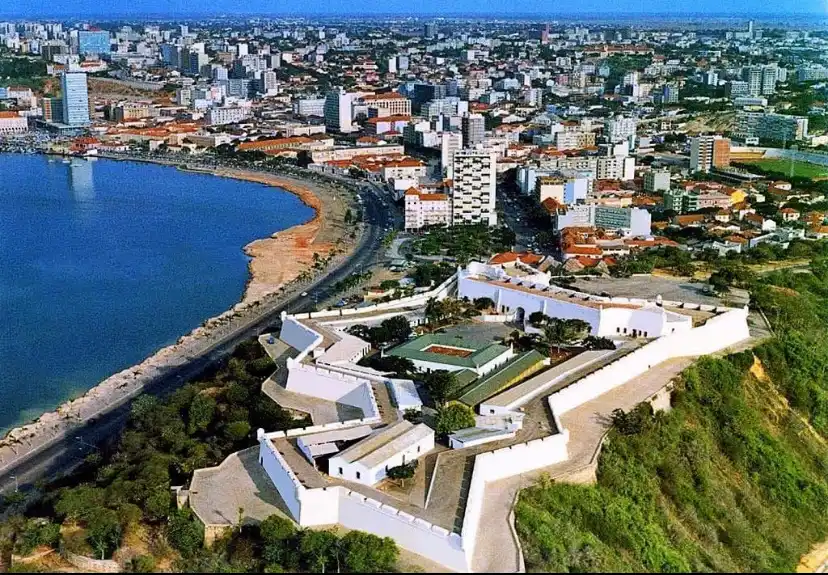
The Fortaleza de São Miguel (Fortress of Saint Michael) is a 16th-century fortress situated on Morro da Fortaleza in Luanda, Angola. Originally a colonial stronghold built by the Portuguese to secure their presence on the West African coast, it is today one of Angola’s most important historical landmarks and home to the National Museum of Military History.
 Kalandula Falls
Kalandula Falls is a major waterfall on the Lucala River in Malanje Province, Angola. Renowned for its semicircular curtain of water and lush surroundings, it is one of Africa’s largest waterfalls by volume and width, drawing visitors for its dramatic natural beauty and cultural significance. Located about 360 kilometers east of Luanda, Kalandula Falls lies on the Lucala River, a tributary of the Cuanza River. The falls plunge from a basalt escarpment into a horseshoe-shaped gorge surrounded by rainforest vegetation. Seasonal rainfall patterns influence its flow, with peak discharge during the wet months between November and April.
 Luanda
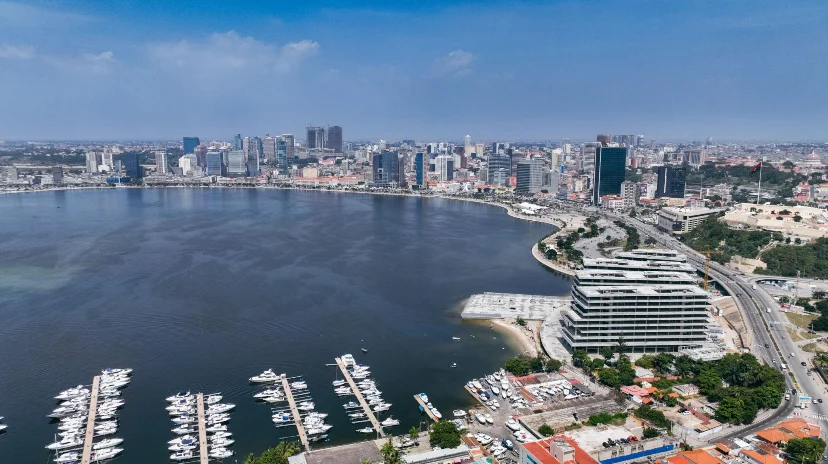
Luanda is the capital and largest city of Angola, located on the Atlantic coast of southwest Africa. It is the country’s main political, economic, and cultural center, and one of the fastest-growing urban areas on the continent, shaped by oil wealth and rapid urbanization. Luanda sits on a natural harbor facing the Atlantic Ocean, with the historic downtown area (Baixa) near the waterfront and newer districts stretching inland. The city includes the Ilha do Cabo (Luanda Island), a sandy spit with beaches, restaurants, and nightlife. The port makes Luanda a major gateway for Angola’s imports and exports.