

Travel to Guinea-Bissau

 3 photos
Guinea-Bissau is a small West African country on the Atlantic coast, bordered by Senegal and Guinea. Known for its complex ethnic diversity and history as a former Portuguese colony, it is among the few African nations where Portuguese remains the official language. Its economy depends heavily on agriculture and cashew exports.
Colonized by Portugal in the 15th century, Guinea-Bissau became a center for the Atlantic slave trade. The African Party for the Independence of Guinea and Cape Verde (PAIGC) led a successful armed struggle, declaring independence in 1973. Since then, the country has faced frequent coups and political instability, though multiparty democracy has been maintained since the 1990s.
Agriculture accounts for most employment and exports, with cashew nuts being the dominant cash crop. The country also has potential in fisheries and bauxite mining but struggles with poor infrastructure, corruption, and limited industrial development. International donors play a major role in funding public services.
Hotels in Guinea-Bissau
 João Vieira and Poilão Marine National Park
João Vieira and Poilão Marine National Park (Portuguese: Parque Nacional Marinho João Vieira e Poilão) is a protected marine and island reserve in southwestern Guinea-Bissau. Established in 2000, it safeguards one of the largest sea turtle nesting sites in the eastern Atlantic and forms a key part of the UNESCO-designated Bijagós Archipelago Biosphere Reserve. Managed by IBAP, the park’s goals include biodiversity protection, regeneration of fish stocks, and preservation of Bijagó cultural heritage. It holds multiple international designations: part of the UNESCO Biosphere Reserve (1996), a Ramsar Wetland of International Importance, and a WWF “Gift to the Earth” (2001). Conservation programs focus on curbing illegal fishing, monitoring turtle populations, and promoting community-based ecotourism.
 Bissau
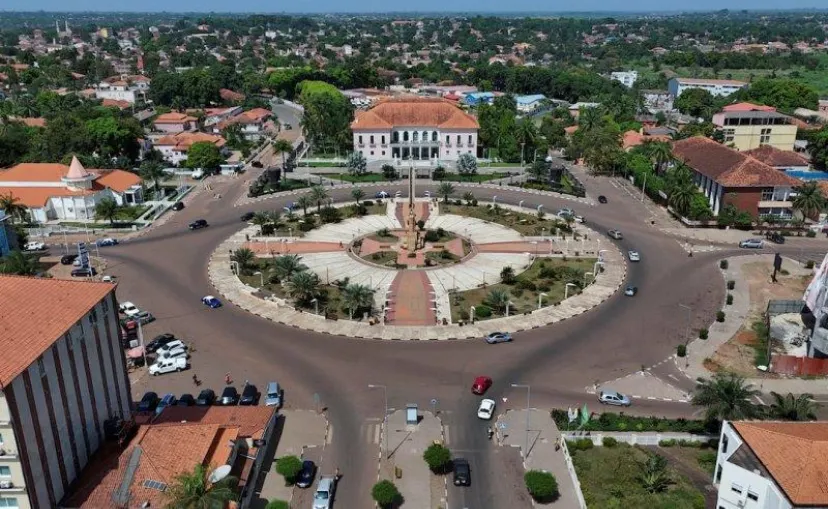
Bissau is the capital and largest city of Guinea-Bissau, located on the Geba River estuary along the Atlantic coast. It serves as the country’s principal port and administrative, economic, and cultural hub. Despite its modest size, Bissau plays a central role in national governance and regional trade. Founded by the Portuguese in the 17th century, Bissau began as a fortified trading settlement involved in commerce and later served as a military outpost. It became the capital of Portuguese Guinea in 1941, replacing Bolama, and retained that role after the country’s independence in 1974. Colonial-era architecture still marks parts of the old town.
 Bolama
Bolama is a coastal city and island in western Guinea-Bissau, located just off the mainland in the Bijagós Archipelago. It was the country’s first capital under Portuguese colonial rule and remains notable for its preserved colonial architecture and historical significance. Bolama became the administrative center of Portuguese Guinea in 1879, chosen for its sheltered harbor and proximity to the mainland. Its planned streets and neoclassical public buildings reflect 19th-century Portuguese urban design. However, chronic water shortages and isolation led to the capital being moved to Bissau in 1941.
 Bubaque
Bubaque is the largest and most populated island in the Bijagós Archipelago of Guinea-Bissau, located in the Atlantic Ocean off the country’s coast. It serves as the administrative and economic hub of the archipelago and is known for its natural beauty, wildlife, and role as a gateway to nearby protected marine areas. Bubaque lies about 30 kilometers off the mainland, accessible by boat from the capital Bissau. The island is largely covered with tropical forest, mangroves, and palm groves, and is surrounded by rich marine ecosystems. It is part of the Bolama-Bijagós Biosphere Reserve, recognized by UNESCO for its ecological diversity and cultural significance.
 Bijagós Archipelago
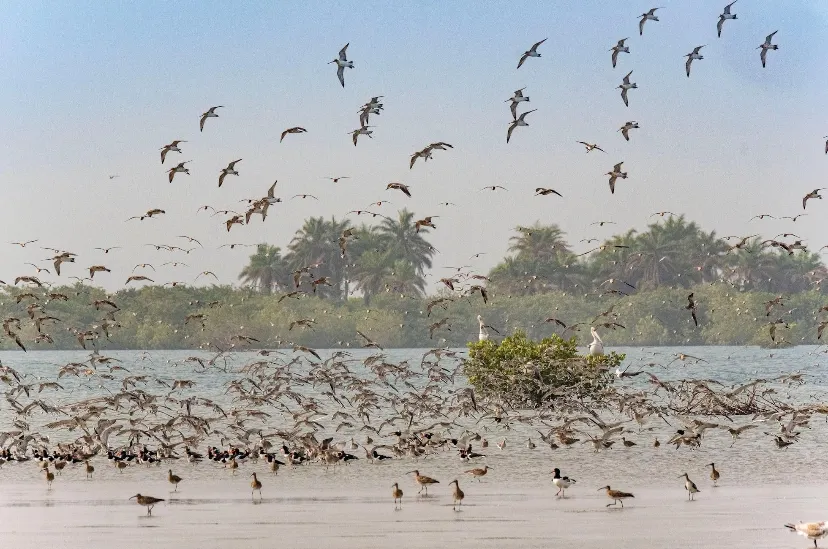
The Bijagós Archipelago is a chain of 88 islands and islets off the coast of Guinea-Bissau in the Atlantic Ocean. Known for its exceptional biodiversity and intact cultural traditions, it was inscribed in 2025 as a UNESCO World Heritage Site under the name Coastal and Marine Ecosystems of the Bijagós Archipelago – Omatí Minhô The archipelago is the only active deltaic island system on Africa’s Atlantic coast, shaped by sediment from the Geba River and Corubal rivers. Its mangroves, mudflats, and intertidal zones support one of the continent’s richest marine ecosystems. Over 870,000 migratory birds use the islands as a key stop on the East Atlantic Flyway, and Poilão hosts one of the world’s largest green sea turtle rookeries. Other species include manatees, Atlantic humpback dolphins, rays, sharks, and marine-adapted hippopotamuses