
Travel to Ivory Coast

 3 photos
Ivory Coast, officially the Republic of Côte d’Ivoire, is a coastal country in West Africa. It is one of the region’s largest and most economically dynamic nations, known for its cocoa production, rich cultural diversity, and major port cities like Abidjan. Since independence from France in 1960, it has become a key player in regional trade and finance.
Ivory Coast borders Ghana, Burkina Faso, Mali, Guinea, and Liberia, with a southern coastline on the Gulf of Guinea. The terrain includes coastal lagoons, forest zones, and northern savannas, rising to Mount Nimba (1,752 m) on the western frontier. The climate is humid tropical in the south and drier in the north, with distinct rainy (May–October) and dry (November–April) seasons.
Hotels in Ivory Coast
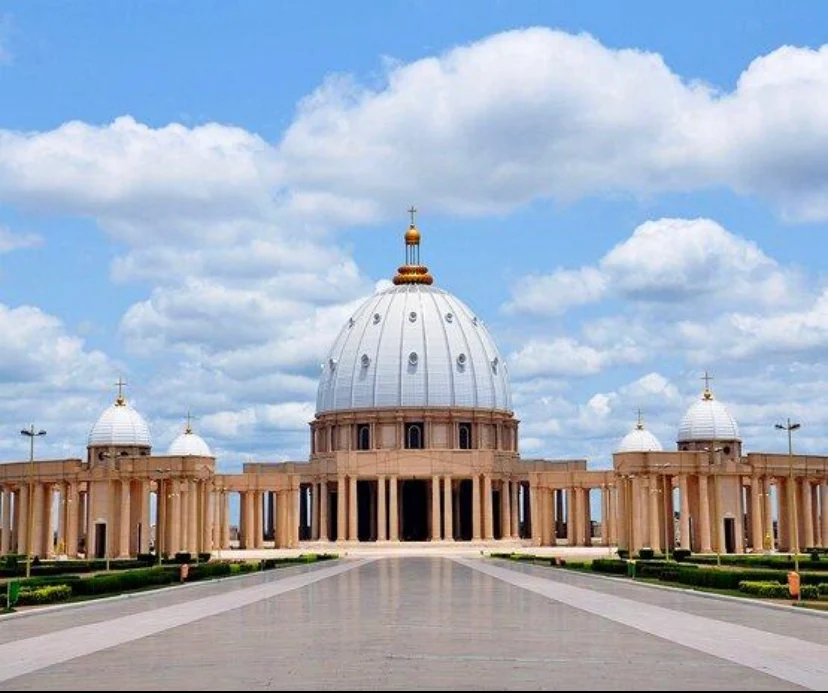
 Yamoussoukro’s iconic basilica
Yamoussoukro is the political and administrative capital of Côte d’Ivoire, located in the country’s center about 240 kilometers (150 miles) north of Abidjan. Officially designated the capital in 1983, it remains a city of symbolic and architectural importance, known for its monumental landmarks and connection to the country’s first president, Félix Houphouët-Boigny.
 Grand-Bassam
Grand-Bassam is a coastal city in southeastern Côte d’Ivoire, located between the Atlantic Ocean and the Ouladine Lagoon, about 40 km east of Abidjan. Once the country’s first colonial capital, it is now renowned for its historic urban fabric and seaside tourism. The city’s old quarter, the “Ville historique de Grand-Bassam,” was inscribed as a UNESCO World Heritage Site in 2012 for its exceptional colonial-era architecture and town planning.
 Abidjan
Abidjan is the largest city and economic capital of Côte d’Ivoire (Ivory Coast), located on the Gulf of Guinea along the Ébrié Lagoon. Known as the “Pearl of the Lagoons,” it is one of Africa’s most populous French-speaking cities and a major commercial and cultural hub in West Africa. Abidjan is Côte d’Ivoire’s economic engine, contributing the majority of national GDP. Its deep-water Port of Abidjan handles exports of cocoa, coffee, timber, and minerals, serving also landlocked Mali and Burkina Faso. The city hosts the African Development Bank, regional financial institutions, and major multinational companies. Modern bridges, expressways, and Félix Houphouët-Boigny International Airport connect Abidjan domestically and internationally.
Tai National Park
Tai National Park is a vast tropical rainforest in southwestern Côte d’Ivoire, bordering Liberia. It preserves the largest remaining portion of the Upper Guinean Forest ,one of the world’s most biologically diverse and endangered ecosystems. Designated a UNESCO World Heritage Site in 1982, the park is a vital refuge for rare species such as the pygmy hippopotamus and western chimpanzee.