

Travel to Libya
 3 photos
Libya is a North African country bordered by the Mediterranean Sea, Egypt, Sudan, Chad, Niger, Algeria, and Tunisia. It is known for its vast desert landscapes, ancient Greco-Roman ruins, and significant oil reserves that shape its economy and geopolitical importance.
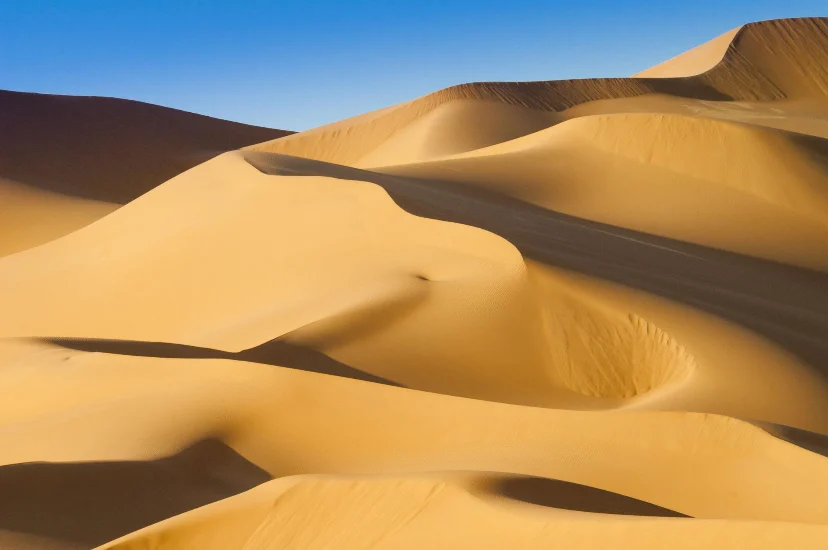
Over 90% of Libya’s land area is desert or semi-desert, dominated by the Sahara. The Mediterranean coastal strip supports most of the population and agriculture, while the interior hosts oases such as Sabha and Kufra. The country experiences hot, dry conditions with minimal rainfall.
Ancient Libya was home to Berber peoples and later part of Phoenician, Greek, and Roman realms, exemplified by cities like Leptis Magna. It became an Italian colony in 1911, gained independence as the Kingdom of Libya in 1951, and was ruled by Muammar Gaddafi from 1969 to 2011. Gaddafi’s fall during the Libyan Civil War led to ongoing political instability.
Hotels in Libya
 Sabha
Sabha
Sabha (also spelled Sebha) is a major oasis city in southwestern Libya and the capital of the Sabha District. Situated in the Fezzan region, it serves as the administrative and economic hub of southern Libya, historically functioning as a key crossroads for Saharan trade routes linking North and Central Africa. Sabha lies in a Saharan oasis surrounded by arid plateaus and desert landscapes. The town’s core features whitewashed modern buildings and older mud-brick quarters with covered alleyways. Its location at the junction of routes toward Tunisia, Chad, and Niger gives it strategic importance for transport and trade across the Fezzan desert basin.
 Sabratha
Sabratha is an ancient coastal city and archaeological site in northwestern Libya, situated west of modern Tripoli. Once part of the Tripolitania region, it flourished as a Phoenician, then Roman, trading center on the Mediterranean and is renowned for its remarkably preserved ruins.
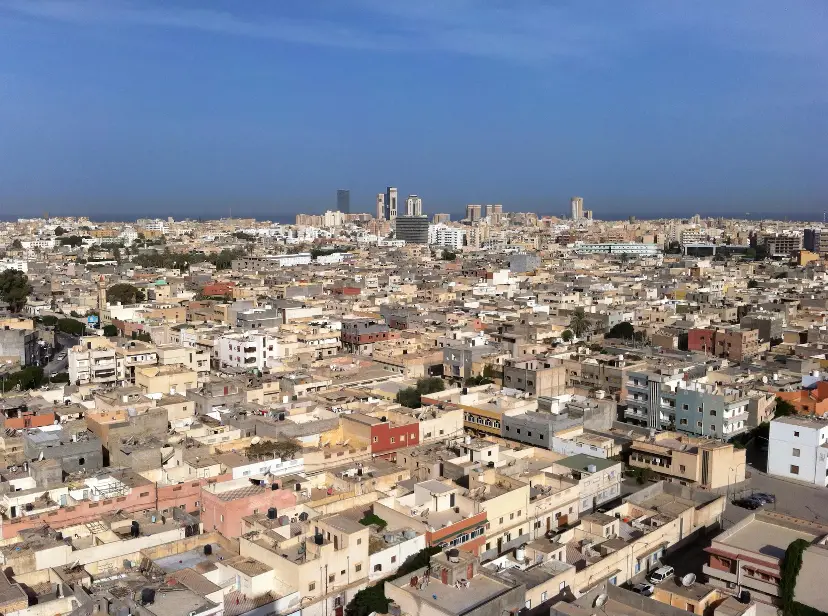
Tripoli is the capital and largest city of Libya, located on the country’s northwestern Mediterranean coast. It serves as Libya’s political, economic, and cultural center, housing key government institutions, businesses, and international missions. Tripoli lies along the Mediterranean Sea, with a natural harbor and coastal plain. The city’s old quarter, the Medina, preserves narrow alleys, traditional markets (souks), and landmarks like the Red Castle (Assaraya al-Hamra). Modern districts extend southward with government buildings, universities, and residential suburbs.
 Leptis Magna
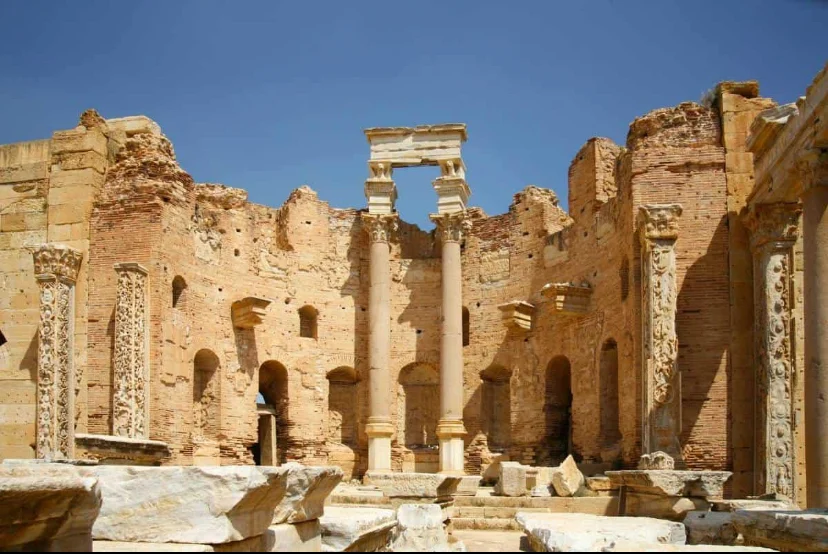
Leptis Magna is an extensive ancient Roman city located near modern Al Khums on the Mediterranean coast of western Libya. Once a major urban center of the Roman Empire in North Africa, it is renowned for its remarkably preserved ruins that showcase imperial urban planning and architecture.