

Travel to Morocco
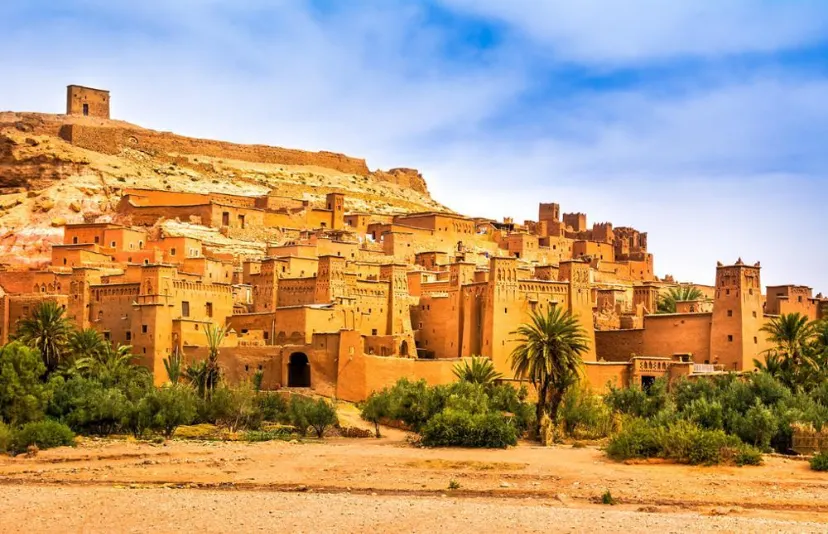

 3 photos
Morocco is a country where Africa, Europe, and the Arab world meet in a single, richly layered identity. Located at the northwestern edge of Africa, it sits along both the Atlantic Ocean and the Mediterranean Sea, just across the Strait of Gibraltar from Spain. This position has made Morocco a historical crossroads for trade, migration, conquest, and cultural exchange for thousands of years. The result is a nation with a deeply diverse character visually, linguistically, architecturally, and socially.
Geographically, Morocco is strikingly varied. It is not a flat or uniform landscape but a tapestry of mountains, deserts, coastlines, and fertile plains. The towering Atlas Mountains run diagonally through the country, dividing regions and shaping climate patterns. Snow can fall on high peaks in winter while deserts remain hot and dry further south. To the north lies the Mediterranean coastline, dotted with fishing towns and beaches, while the west opens onto the Atlantic Ocean with long sandy shores and powerful waves.
In the south and southeast, Morocco gradually transitions into the vast expanse of the Sahara Desert. Here, sand dunes rise like waves frozen in time, especially in iconic regions such as Merzouga. These desert areas are sparsely populated but culturally rich, home to nomadic traditions that have adapted to harsh environments over centuries. The contrast between lush mountain valleys, coastal cities, and arid desert gives Morocco a dramatic geographical identity that feels almost cinematic.
To understand Morocco is to appreciate its complexity. It is not just a destination but a living mosaic of cultures, landscapes, and histories. From the silence of the Sahara to the noise of Marrakech’s markets, from the serenity of mountain villages to the energy of coastal cities, Morocco offers a deeply layered experience that reflects both its ancient roots and its modern ambitions.
Hotels in Morocco
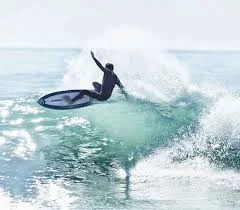 Surf in Essaouira
Essaouira is a windswept Atlantic coastal town where the ocean never really sits still. The beach is wide, golden, and open, stretching in a long curve along the edge of a historic blue-and-white medina. Behind it, stone ramparts and old Portuguese fortifications overlook the waves, giving the whole coastline a dramatic, almost cinematic backdrop. What makes surfing here unique is the constant Atlantic wind and steady swell. The waves are not huge and intimidating like in extreme surf spots; instead, they are clean, rolling beach breaks that peel gently across soft sand. This makes Essaouira especially popular for beginners and intermediate surfers, but also fun for experienced riders who want relaxed, playful sessions rather than heavy reefs. The ocean here feels alive. On windy days, the surface turns into a textured, shimmering blue-green field with white spray blowing off the tops of waves. You’ll often see kitesurfers and windsurfers cutting across the horizon, because Essaouira is also known as the “Wind City of Africa.”
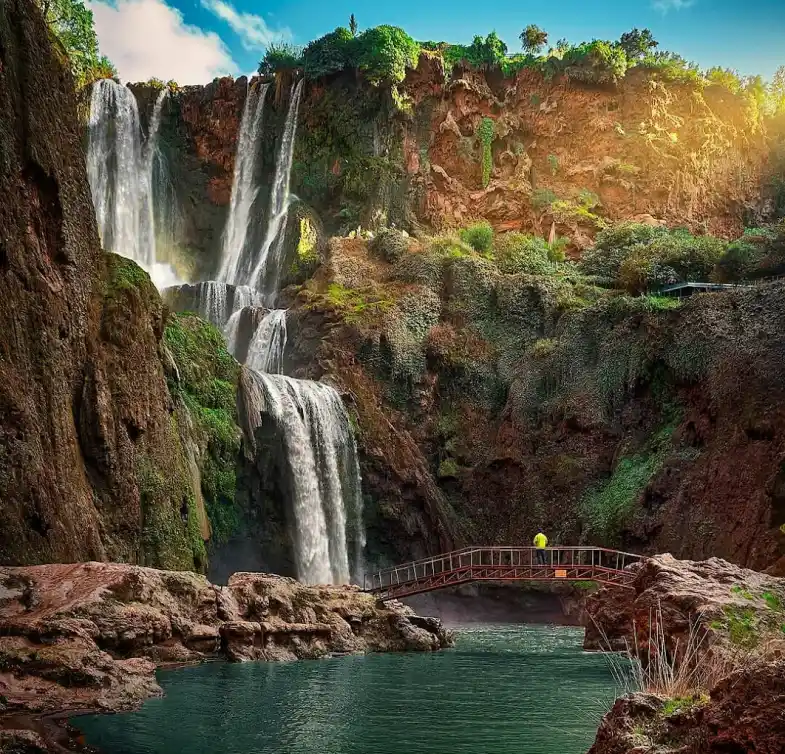 Ouzoud Waterfalls
The Ouzoud Waterfalls are one of Morocco’s most famous natural attractions and a very popular day trip from Marrakech. They sit in the Middle Atlas Mountains, about 150–170 km from Marrakech (roughly a 2.5–3.5 hour drive each way), making them easy to visit in a single day. At roughly 110 meters high, the waterfalls don’t drop in a single straight fall. Instead, the water of the Ouzoud River splits into several powerful streams that tumble over staggered cliffs, creating multiple levels of white, roaring water that spread out like a giant natural staircase. The constant spray rises into the air, often catching the sunlight and forming faint rainbows over the gorge. The atmosphere is a mix of raw nature and human presence. Narrow paths and stone steps wind down the cliffside, passing small cafés and viewpoints where you can hear the thunder of the falls growing louder as you descend. From the bottom, the scale becomes more dramatic: the cliffs rise around you, and the waterfalls feel like a curtain of moving water dropping from the sky.
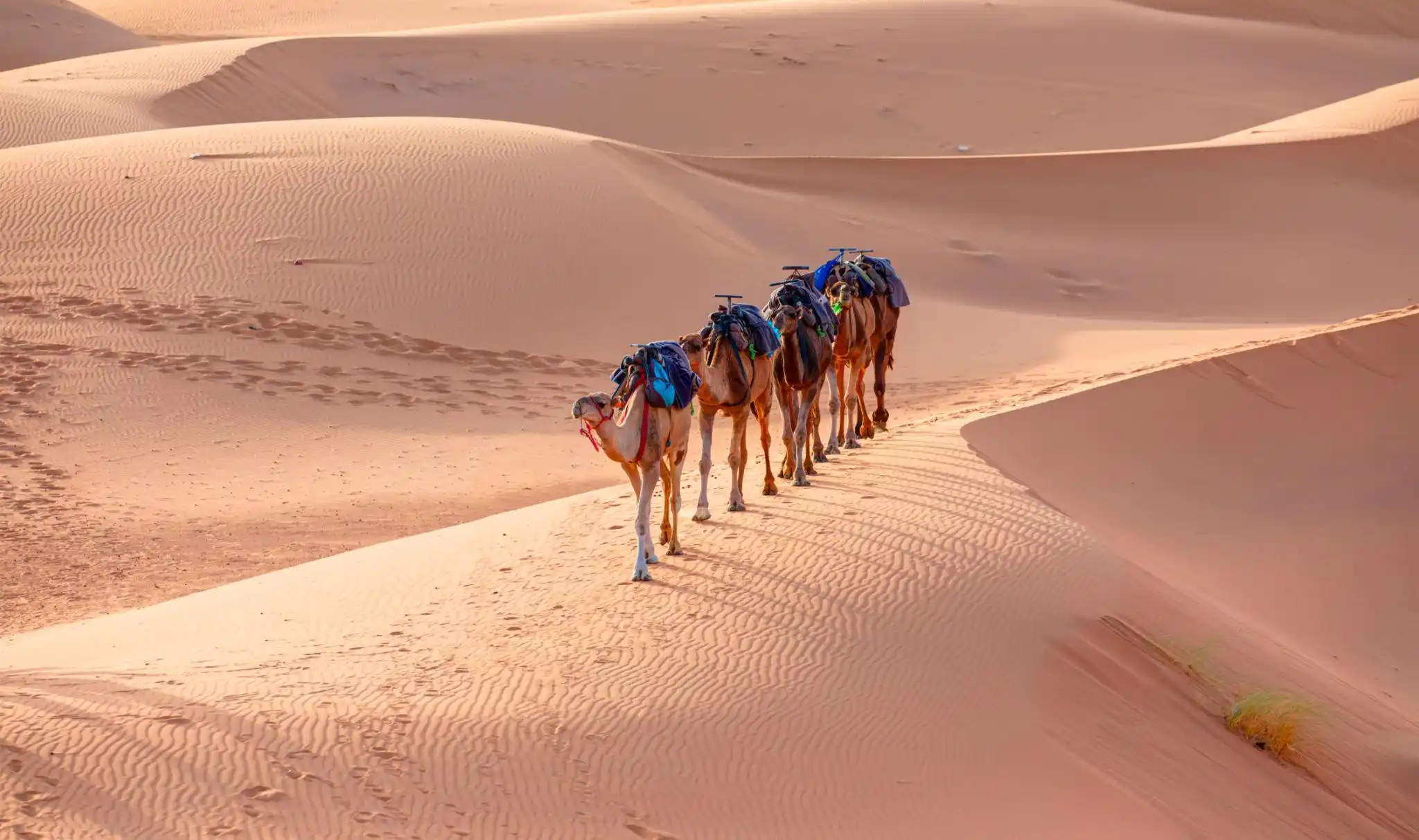 Sahara Desert Trekking in Morocco
Your journey usually begins at the edge of the dunes, where you meet your camel caravan. Riding a camel across the golden sand feels slow, rhythmic, and peaceful. The animals move in a gentle sway, giving you time to absorb the silence and vastness of the Sahara. Sunset camel rides are especially popular because the sand changes color—from bright gold to deep orange and red. After the camel trek, you arrive at a desert camp. Modern “luxury camps” are designed to give comfort while still keeping the traditional desert atmosphere. Waking up early in the desert is worth it. The sunrise slowly lights up the dunes, shifting the colors of the sand from dark purple to bright gold. Many visitors climb a nearby dune to watch the view before breakfast.
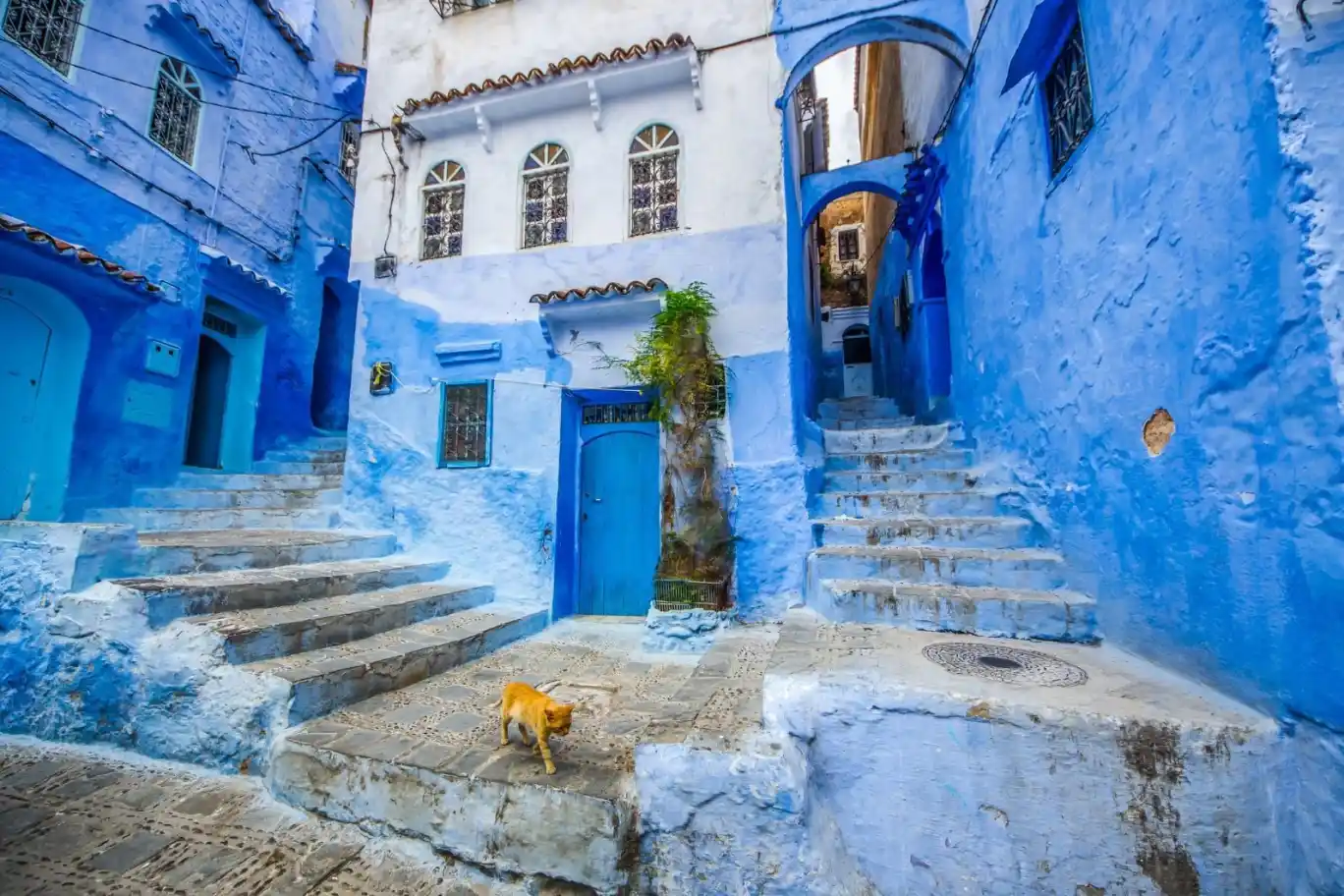 Chefchaouen (the Blue City)
Chefchaouen is a city in northern Morocco, nestled in the Rif Mountains. Known for its striking blue-washed buildings and serene atmosphere, it has become one of Morocco’s most photogenic and visited destinations, blending Andalusian-Moorish heritage with Amazigh (Berber) traditions. Chefchaouen was founded in 1471 by Moulay Ali Ben Moussa Ben Rached El Alami as a fortress to resist Portuguese invasions. Over time, it became a refuge for Muslim and Jewish populations expelled from Andalusia after the Reconquista, influencing its architecture and cultural fabric. Chefchaouen’s economy relies heavily on tourism, crafts, and agriculture. It is famous for handwoven blankets, wool garments, and goat cheese from nearby villages. Despite increasing visitor numbers, the town retains a tranquil rhythm and a reputation as one of Morocco’s most relaxed destinations. Located about 110 kilometers southeast of Tangier, Chefchaouen overlooks lush valleys and rugged peaks of the Rif Mountains. Popular nearby sites include Talassemtane National Park and the Ras El Maa spring. The city is accessible by road from Tangier, Tetouan, and Fez, making it a favored stop on northern Morocco travel routes.
Marrakech is a historic city in central Morocco, renowned for its red-hued architecture, bustling souks, and deep cultural heritage. Founded in the 11th century, it was once the imperial capital of several Moroccan dynasties and remains a vibrant center of art, commerce, and tourism. Its old quarter, the medina, is a UNESCO World Heritage site celebrated for its architecture and sensory richness.