

Travel to Namibia

 3 photos
Namibia is a country in southern Africa known for its striking desert landscapes, rich wildlife, and diverse cultures. It combines dramatic natural beauty, such as the Namib Desert and Etosha National Park with a stable democracy and a resource based economy. Visit Namibia today with travelcenterglobal
Namibia spans the Atlantic coast between Angola and South Africa, encompassing vast arid regions like the Namib and Kalahari deserts. The Namib Desert, one of the world’s oldest, features towering dunes and unique wildlife adapted to extreme dryness. Etosha National Park hosts elephants, lions, and endangered black rhinos.
Namibia is ethnically and linguistically diverse, with communities such as the Ovambo, Herero, and Himba maintaining distinct traditions. The nation emphasizes reconciliation and cultural preservation through music, crafts, and festivals that reflect its African and European heritage.
Hotels in Namibia
 Drive through Skeleton Coast
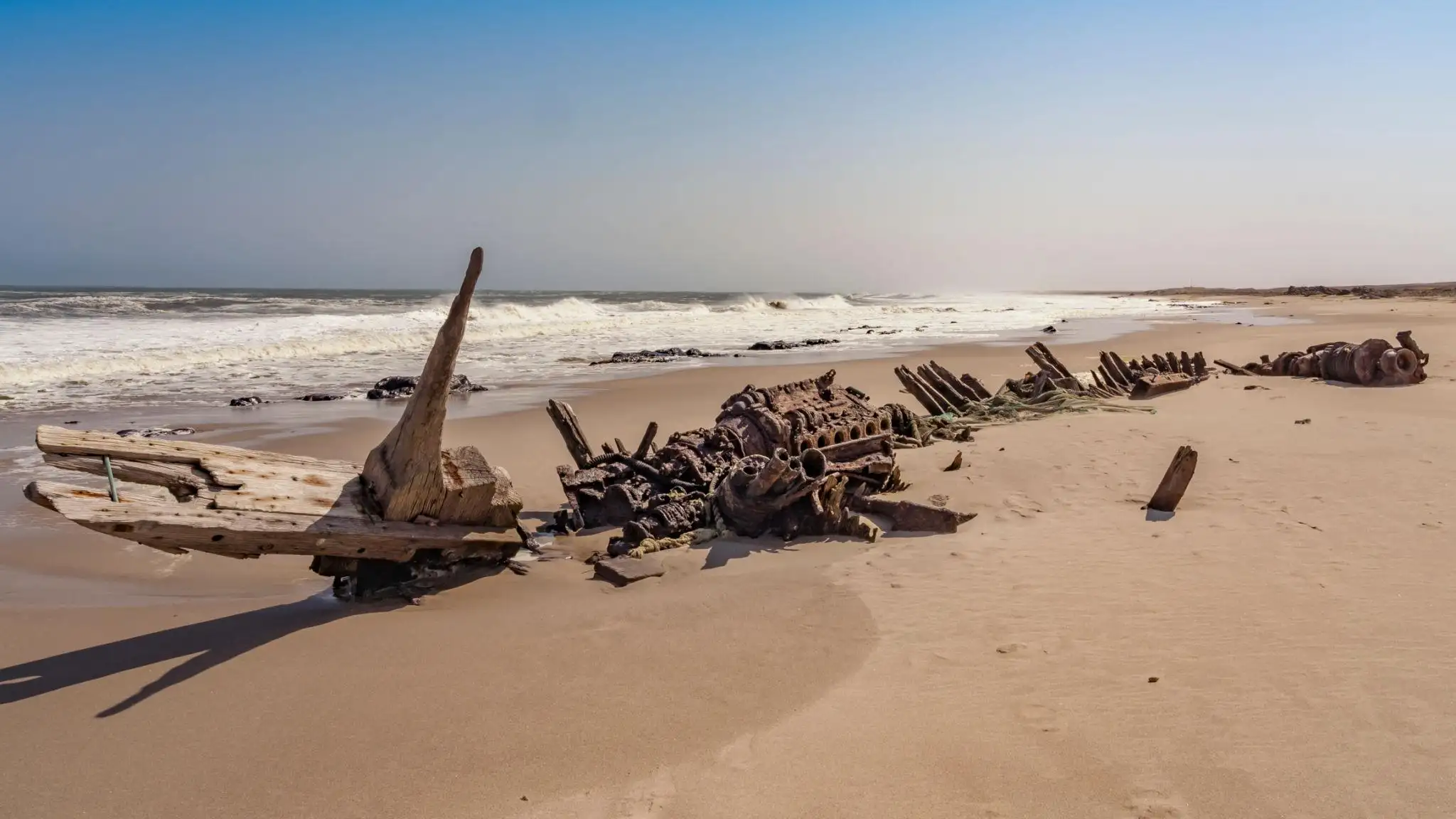
The Skeleton Coast is a remote and striking stretch of Atlantic shoreline in northwestern Namibia. It is renowned for its shipwrecks, dense fog, and stark desert scenery that juxtapose the ocean and dunes. The area’s desolate beauty and rich wildlife make it one of Africa’s most dramatic coastal landscapes. The Skeleton Coast extends from the Kunene River on the Angolan border to the Ugab River. It forms part of the Namib Desert, one of the oldest deserts on Earth. The cold Benguela Current creates heavy fog and unpredictable weather, while the inland area features vast dunes, gravel plains, and ephemeral riverbeds. This unique combination produces both harsh conditions and rare ecological niches.
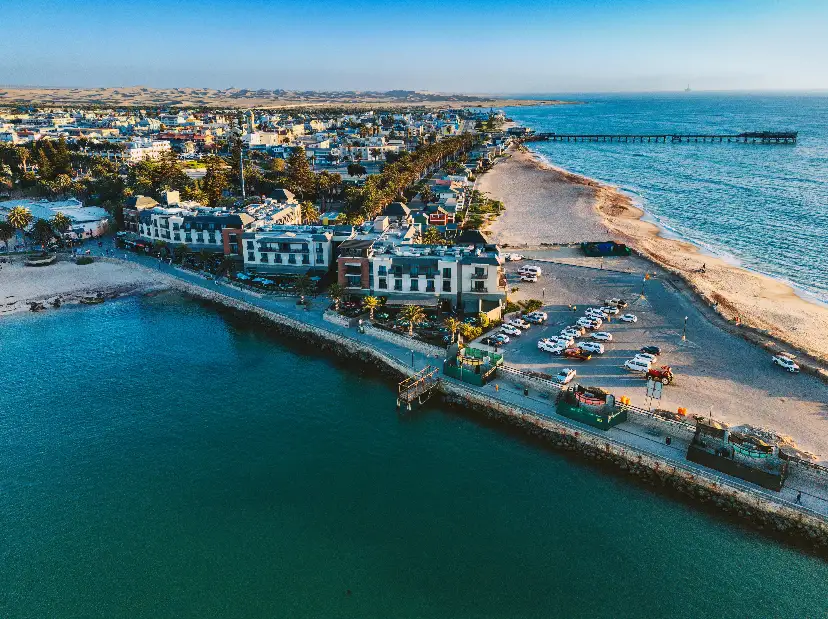
Swakopmund is a coastal city in the Erongo Region of Namibia, situated on the Atlantic coast where the Namib Desert meets the sea. Known for its distinctive German colonial architecture and adventure tourism, it serves as a cultural and recreational hub between Windhoek and Walvis Bay. Tourism dominates the city’s economy. Swakopmund is a gateway to the Namib-Naukluft National Park and the Skeleton Coast, offering activities such as sandboarding, quad biking, skydiving, and dolphin cruises. The city also serves as a service and logistics hub for nearby mining and fishing industries.
 Explore the Namib Desert
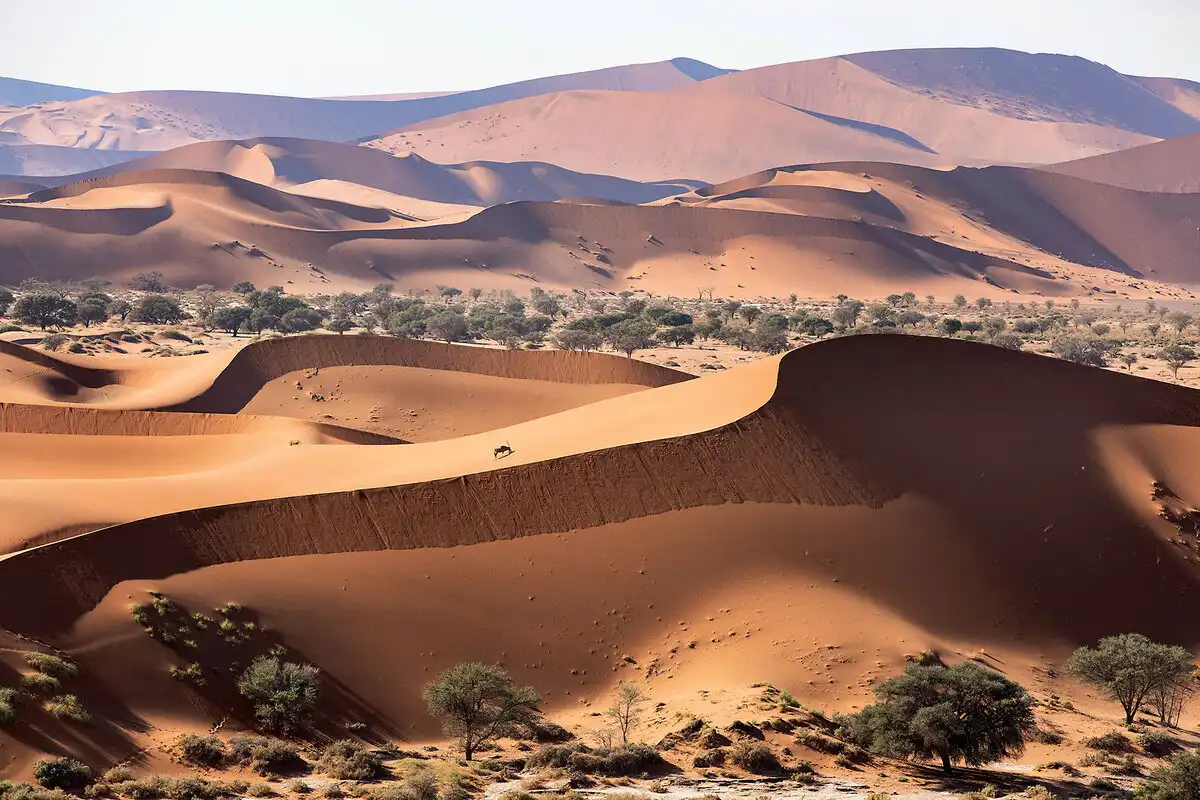
The Namib Desert is a vast coastal desert stretching along western Namibia, recognized as the oldest desert on Earth. With its towering red dunes, fog-nourished ecosystems, and dramatic Atlantic coastline, it represents one of the planet’s most visually striking and ecologically distinctive landscapes. It is a UNESCO World Heritage site for its geological age and biodiversity. Much of the desert lies within Namib-Naukluft National Park, one of Africa’s largest protected areas, safeguarding endemic species and delicate habitats. Visitors come to climb Dune 45 or Big Daddy, explore Sesriem Canyon, or view the Namib Sand Sea from hot-air balloons. Sustainable tourism and conservation initiatives aim to preserve its fragile ecosystems amid pressures from climate change and mining.
Visit Sossusvlei
Sossusvlei is a vast salt and clay pan in the southern Namib Desert, located within Namib-Naukluft National Park in the Hardap Region of Namibia. Surrounded by some of the world’s tallest sand dunes, it is among Africa’s most photographed landscapes and a defining symbol of Namibia’s desert beauty. The area’s attractions include Deadvlei, a clay pan dotted with 900-year-old blackened camelthorn trees, Dune 45, a popular sunrise climb offering panoramic views, Big Daddy, Sossusvlei’s highest dune at about 325 m; and the nearby Hidden Vlei and Sesriem Canyon, a narrow gorge carved by the Tsauchab over millennia.