
Travel to Bahrain


 4 photos
Bahrain, officially the Kingdom of Bahrain, is a small island country in the Middle East located in the Persian Gulf between Saudi Arabia and Qatar. The nation comprises about 33 islands, with Bahrain Island as the largest. Known for its ancient civilization, strategic trade location, and modern financial economy, it remains one of the Gulf’s most progressive societies.
The islands have been inhabited for over 5,000 years and were once the center of the Dilmun civilization, a key Bronze Age trading hub linking Mesopotamia and the Indus Valley. Over time, Bahrain was ruled by the Portuguese Empire and later the Persians before the Āl Khalīfah family took power in 1783. It became a British protectorate in 1861 and gained full independence in 1971. The kingdom has since evolved into a constitutional monarchy, though it has experienced periodic political unrest, particularly between the Sunni-led government and the Shiʿa-majority population.
Hotels in Bahrain
 The Bahrain International Circuit
The Bahrain International Circuit (BIC) is a world-class motorsport facility located in Sakhir, Bahrain. Opened in 2004, it became the first Formula 1 Grand Prix venue in the Middle East and is celebrated as “The Home of Motorsport in the Middle East.” The circuit hosts international races, public driving experiences, and entertainment events throughout the year. The inaugural Bahrain Grand Prix in 2004 marked Formula 1’s debut in the region, won by Michael Schumacher. Since 2014, the event has been staged as a night race under floodlights, producing some of F1’s most visually striking moments. In 2020, BIC uniquely hosted two F1 rounds on separate layouts: the Bahrain and Sakhir Grands Prix. The circuit also accommodates FIA World Endurance Championship rounds, GT festivals, and national motorsport series.
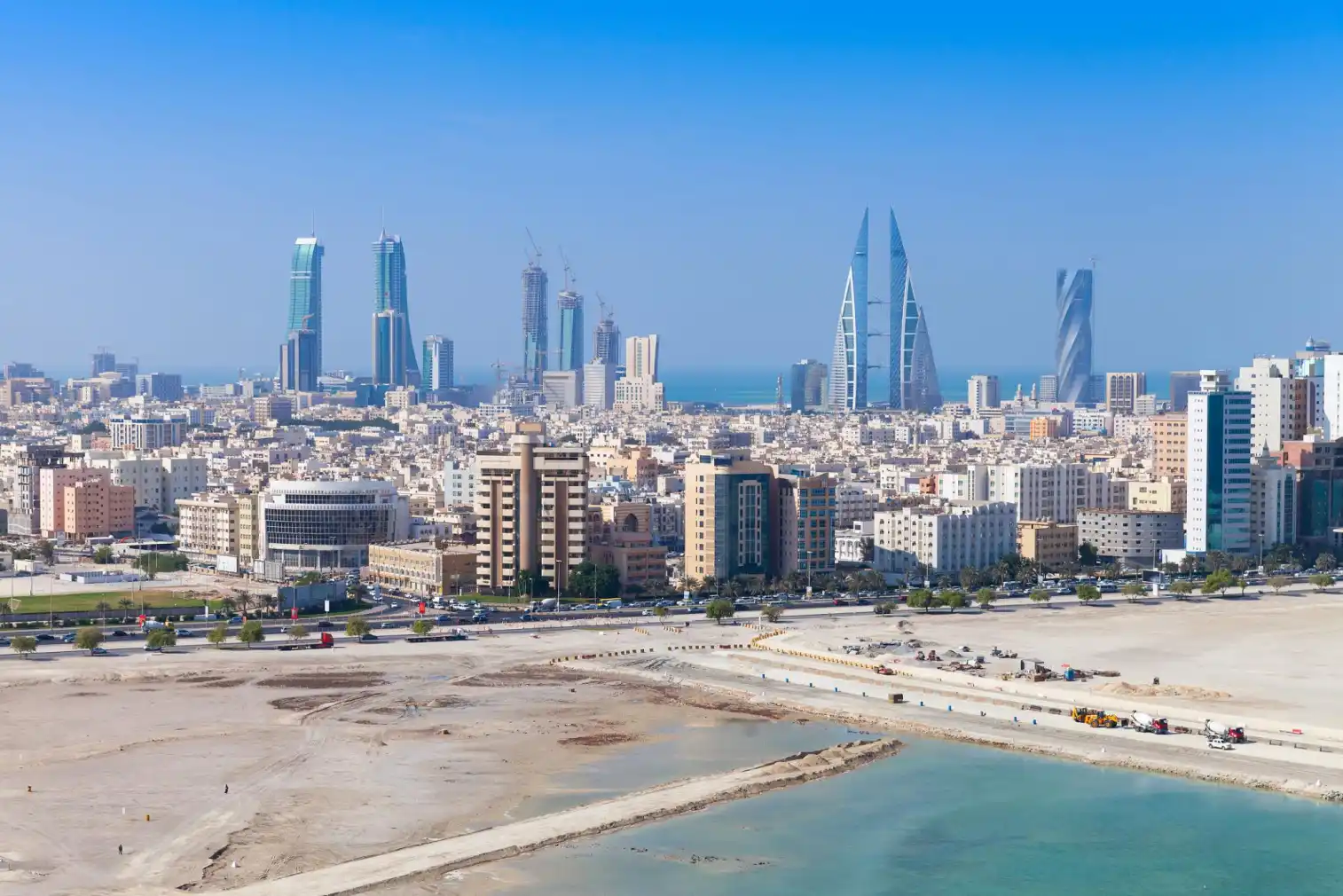
 Bahrain World Trade Center
The Bahrain World Trade Center (BWTC) is a 240-meter, twin-tower skyscraper complex in Manama, Bahrain. Completed in 2008, it is the first skyscraper in the world to integrate large-scale wind turbines into its design, making it an architectural and environmental landmark in the Gulf region. BWTC’s two sail-shaped towers evoke traditional Arabian dhow sails and are joined by three skybridges supporting wind turbines. The aerodynamic form funnels Gulf breezes through the turbines, supplying a portion of the towers’ energy needs. Each tower contains 44 stories of premium office space, crowned by mechanical floors and observation levels. The façades combine glass curtain walling and aluminum cladding totaling more than 39,000 m².
The Tree of Life is a solitary Prosopis cineraria (mesquite) tree located in the desert of southern Bahrain, roughly 40 km south of Manama. The tree grows alone in Bahrain’s southern desert, far from any visible water source. Scientists believe its deep roots reach an underground aquifer or that it absorbs moisture from desert sands and air. Surrounding excavations have uncovered traces of an ancient settlement, suggesting the area once supported human habitation. A circular walkway featuring carvings of other notable trees now allows visitors to view it from multiple perspectives.
 Bahrain Fort
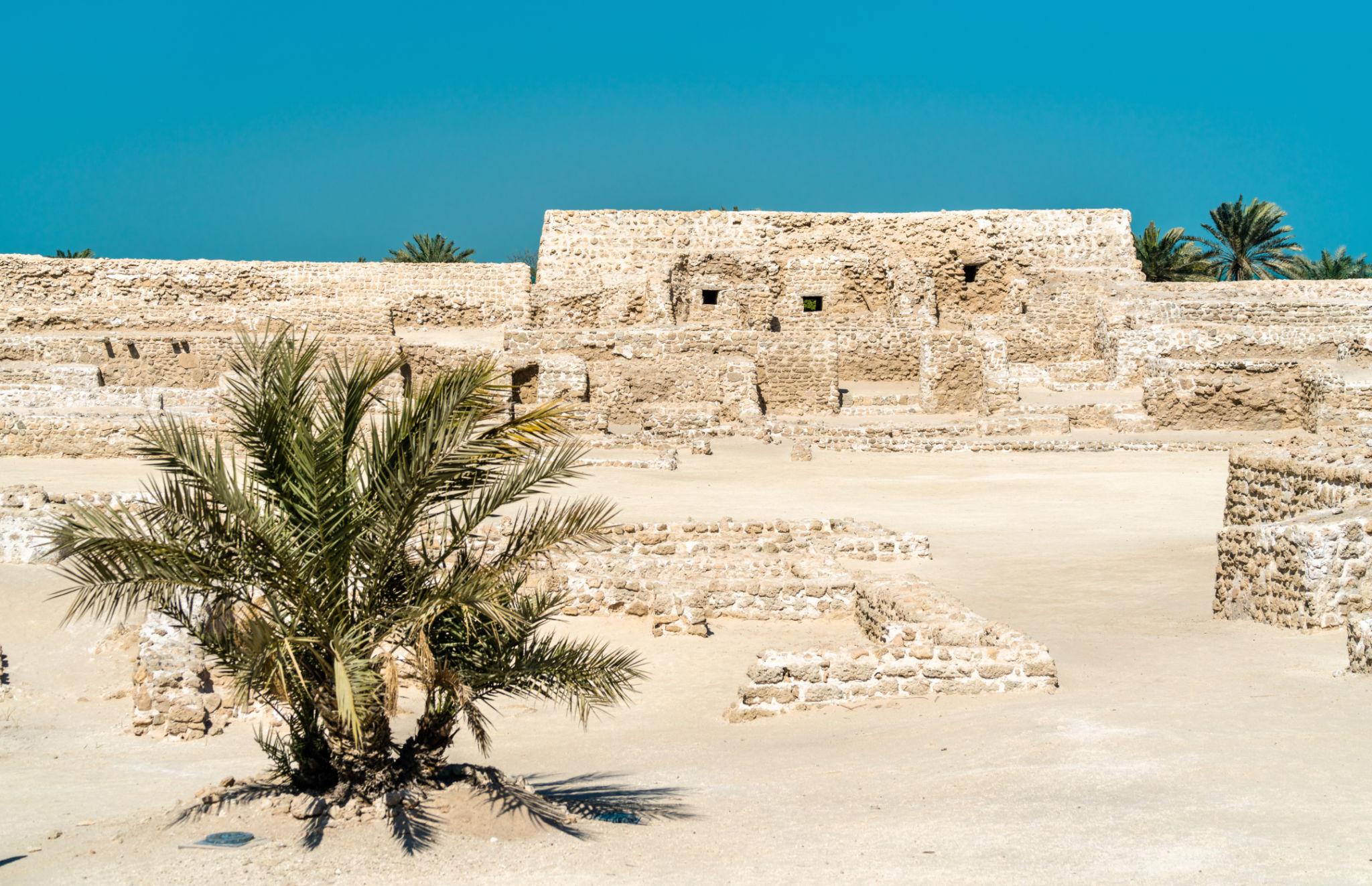
Bahrain Fort, also known as Qal’at al-Bahrain, is a UNESCO World Heritage Site situated on Bahrain’s northern coast near Manama. Built atop a 17.5-hectare artificial mound formed by over 4,000 years of continuous settlement, it represents the ancient capital and port of the Dilmun civilization, one of the Gulf’s earliest trading powers. The existing limestone fort, erected by Portuguese forces in 1561 CE, incorporates thick bastioned walls and a commanding view of the sea. Beneath it lie remnants of earlier cities, making the site a visible cross-section of Bahrain’s layered history. Surrounding palm groves and a walking path provide panoramic coastal vistas, especially striking at sunset.
Bahrain National Museum
The Bahrain National Museum is the largest and oldest public museum in Bahrain, located on the Sheikh Hamad Causeway in Manama. Opened in 1988, it presents 6,000 years of Bahraini history, archaeology, and culture, and remains one of the Gulf region’s most significant cultural institutions. Designed in sleek postmodern style, the museum’s white travertine façade and waterfront setting create a contemporary landmark on an artificial peninsula overlooking Muharraq Island. Its two main buildings house exhibition halls, art galleries, lecture spaces, conservation labs, and a café terrace facing the nearby Bahrain National Theatre.