
Travel to Bhutan


 4 photos
Bhutan is a small, landlocked country in the Eastern Himalayas of South Asia, bordered by India and China. Known for its dramatic mountain landscapes and unique development philosophy of Gross National Happiness, Bhutan combines ancient Buddhist traditions with cautious modernization and environmental stewardship.
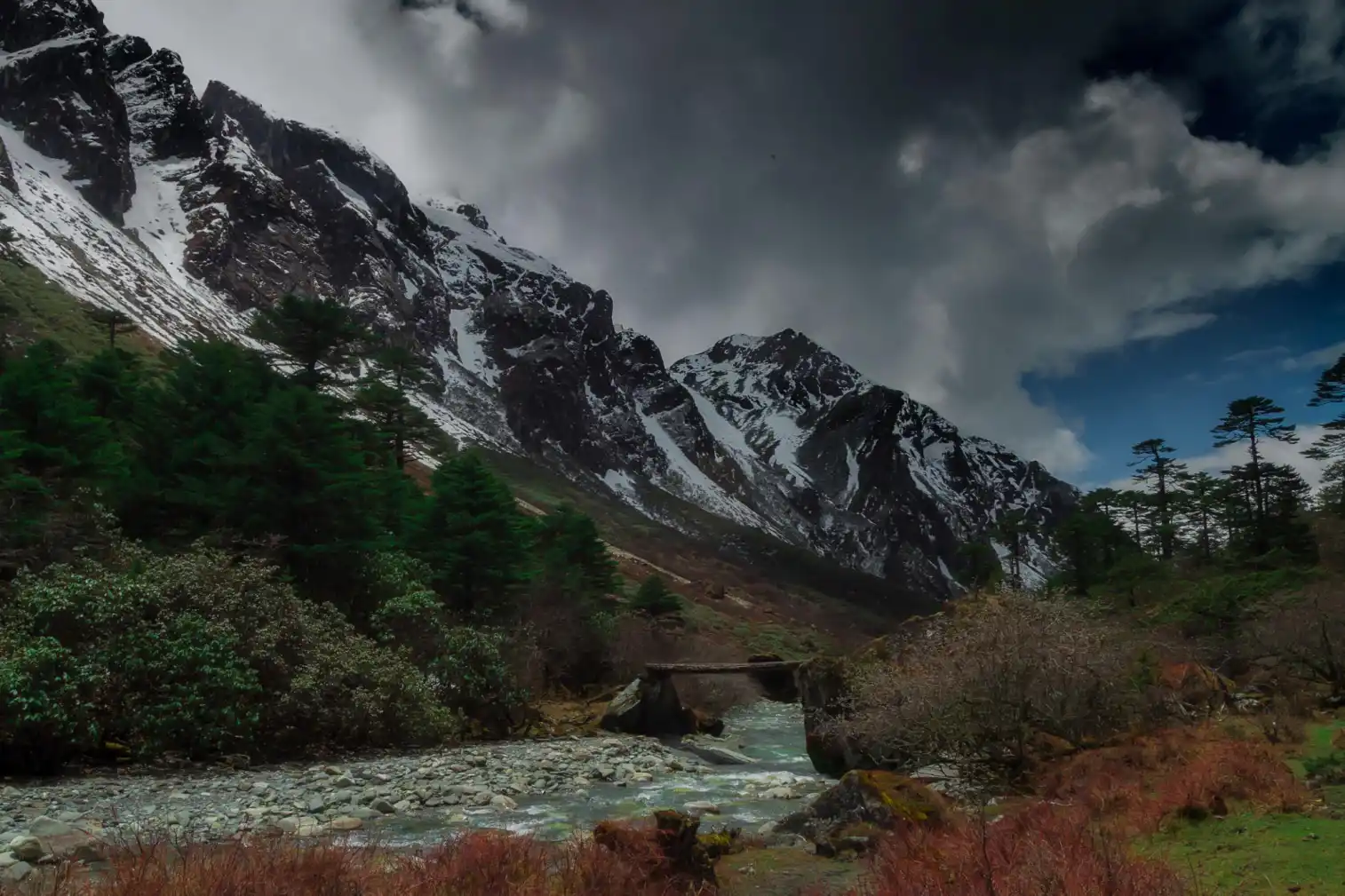
Bhutan’s terrain ranges from subtropical plains in the south to steep Himalayan peaks in the north, including Gangkhar Puensum, one of the world’s highest unclimbed mountains. About 70% of its land remains forested, and conservation is a constitutional mandate. Bhutan is carbon negative, absorbing more carbon than it emits through hydropower and strict environmental policies. Tourism is carefully controlled to protect its natural beauty and traditions. Famous landmarks include the Tiger’s Nest Monastery and beautiful dzongs. Bhutan remains peaceful, spiritual, and environmentally conscious.
Hotels in Bhutan
 Paro Tshechu
Paro Tshechu is one of Bhutan’s most revered annual religious festivals, held each spring at the historic Rinpung Dzong in Paro Valley. Dedicated to Guru Rinpoche (Padmasambhava), who introduced Buddhism to Bhutan, it blends sacred masked dances, folk songs, and vibrant communal gatherings into a deeply spiritual and social event. Established around 1644 during the consecration of Rinpung Dzong, Paro Tshechu was introduced to honor Guru Rinpoche’s deeds and teachings. It was later expanded under Gyalse Tenzin Rabgye in the 1680s. The festival commemorates Guru Rinpoche’s miracles and his role in subduing negative forces, marking one of Bhutan’s earliest organized Buddhist festivals.
 Phobjikha Valley
Phobjikha Valley is a glacial valley in central Bhutan, located in Wangdue Phodrang. Renowned for its scenic landscapes and cultural heritage, it is also an important conservation site, serving as the winter habitat of the endangered black-necked crane. The valley’s harmony between nature and traditional village life exemplifies Bhutan’s approach to sustainable development. Nestled on the western slopes of the Black Mountains, Phobjikha is one of Bhutan’s broadest high-altitude valleys. The U-shaped glacial basin is characterized by open marshlands, alpine meadows, and surrounding conifer forests. Its pristine environment has led to its inclusion within the boundaries of the Jigme Singye Wangchuck National Park, reflecting national efforts to balance conservation and community livelihood.
 Punakha Dzong
Punakha Dzong is a fortress monastery in Punakha, Bhutan, located at the confluence of the Pho Chhu and Mo Chhu rivers. It is one of the most magnificent and historically significant dzongs in Bhutan, serving as both a spiritual and administrative center since the 17th century. Punakha Dzong was constructed by the unifier of Bhutan, Zhabdrung Ngawang Namgyal, as the second dzong built under his rule. It served as the seat of the Bhutanese government until the mid-20th century and remains the winter residence of the Central Monastic Body, including the Je Khenpo, Bhutan’s chief abbot. The dzong was also the site of the coronation of Bhutan’s first king in 1907.
 Thimphu
Thimphu is the capital and largest city of Bhutan, located in the country’s western mountains along the Wang Chhu River. It serves as Bhutan’s political, economic, and cultural center, blending traditional Buddhist architecture with modern development in a unique Himalayan setting. Thimphu lies in a steep valley surrounded by forested mountains of the Himalayas. The Wang Chhu River flows through the city, which sits at an altitude exceeding 2,300 meters. Expansion has transformed the once-scattered hamlets into a dense urban core, while zoning laws maintain traditional aesthetics and protect green spaces.
 Paro Taktsang
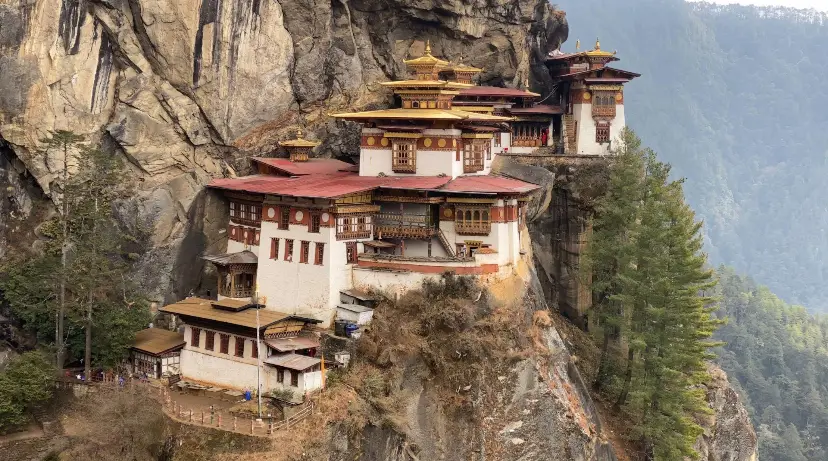
Paro Taktsang, also known as the Tiger’s Nest Monastery, is a revered Himalayan Buddhist site perched dramatically on a cliffside in the Paro Valley, Bhutan. It is one of the country’s most iconic landmarks and a major pilgrimage destination symbolizing Bhutan’s cultural and spiritual heritage. The monastery consists of several temples and living quarters integrated into the vertical rock face, about 900 meters (3,000 feet) above the valley floor. Whitewashed walls, golden roofs, and wooden balconies contrast against the granite cliffs, creating one of the most photographed scenes in Bhutan. The surrounding pine forests are adorned with fluttering prayer flags.