
Travel to Turkey
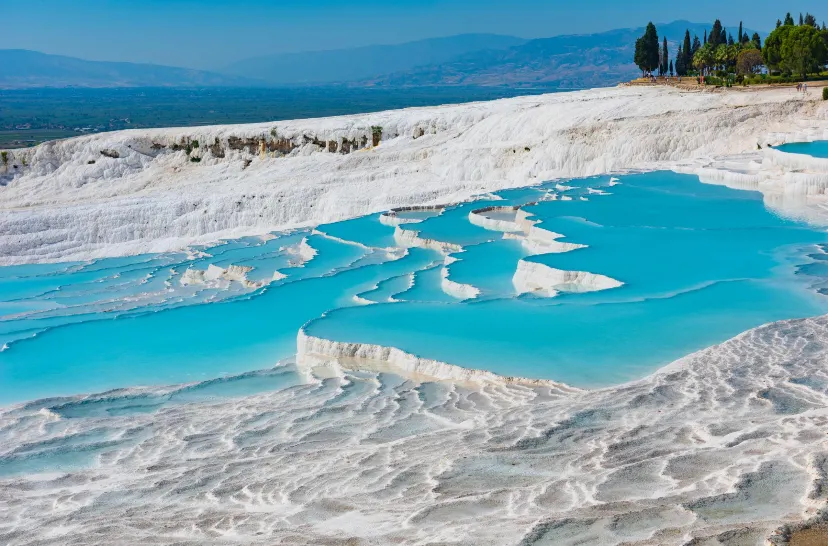

 3 photos
Turkey is a nation where continents meet, histories overlap, and cultures blend into a rich and layered identity. Straddling southeastern Europe and western Asia, Turkey occupies a unique geographical and cultural position that has shaped its role in global history for thousands of years. It is neither entirely Eastern nor Western, but rather a dynamic fusion of both, constantly evolving while remaining deeply connected to its past.
Turkey’s history is extraordinarily deep, stretching back to some of the earliest known civilizations. Ancient Anatolia was home to the Hittites, Phrygians, and Lydians, among others. Later, Greek city-states flourished along the western coast, leaving behind ruins that still attract visitors today. The region eventually became part of the Roman Empire and later the Byzantine Empire, with Constantinople serving as a powerful capital for over a millennium.
Culturally, Turkey is incredibly rich and varied. Its traditions reflect centuries of interaction between different peoples and civilizations. Turkish hospitality is well known, guests are often treated with warmth and generosity. Sharing tea or coffee is a central part of social life, and conversations often extend for hours. The iconic Turkish tea, served in small tulip shaped glasses, is more than just a drink, it is a symbol of connection and community.
Hotels in Turkey
 Cruise the Bosporus
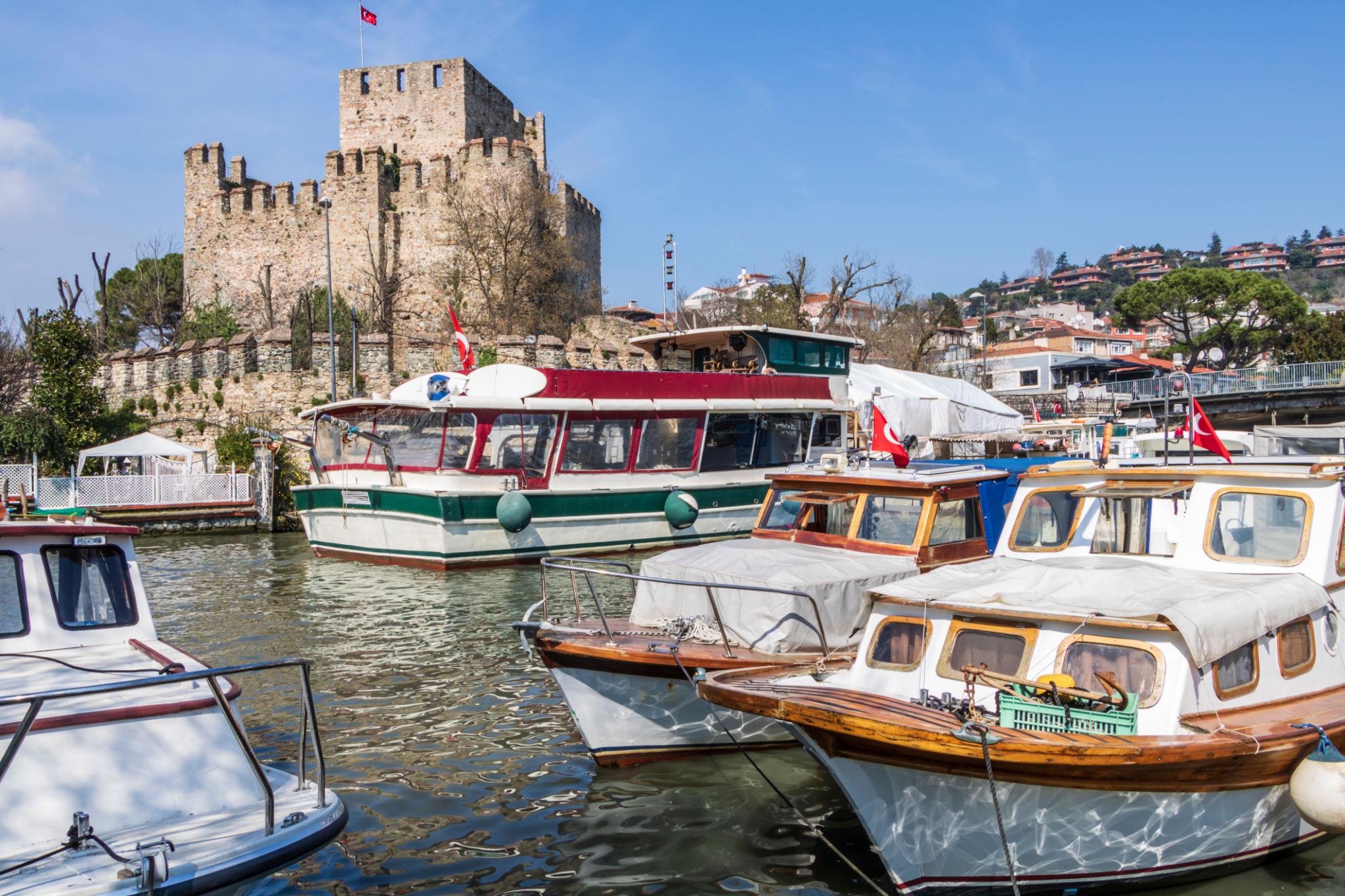
A Bosporus cruise is one of the most memorable experiences in Turkey, especially in Istanbul. It’s a boat journey along the narrow waterway called the Bosporus Strait, which connects the Black Sea to the Sea of Marmara. The Bosporus Strait, also spelled Bosphorus, is a narrow natural waterway in northwestern Turkey that connects the Black Sea to the Sea of Marmara, dividing the European and Asian parts of Istanbul. It forms part of the Turkish Straits system and remains one of the world’s most strategically and commercially significant maritime corridors. The Bosporus cuts through Istanbul from north to south, linking the Black Sea and the Sea of Marmara, which then connects to the Mediterranean via the Dardanelles. It is the world’s narrowest international shipping lane, shaped by ancient geological processes. A strong surface current flows southward, while a denser undercurrent runs northward, creating a two-layer flow that has fascinated oceanographers since the 17th century.
 Visit The Stunning Hagi Sophia
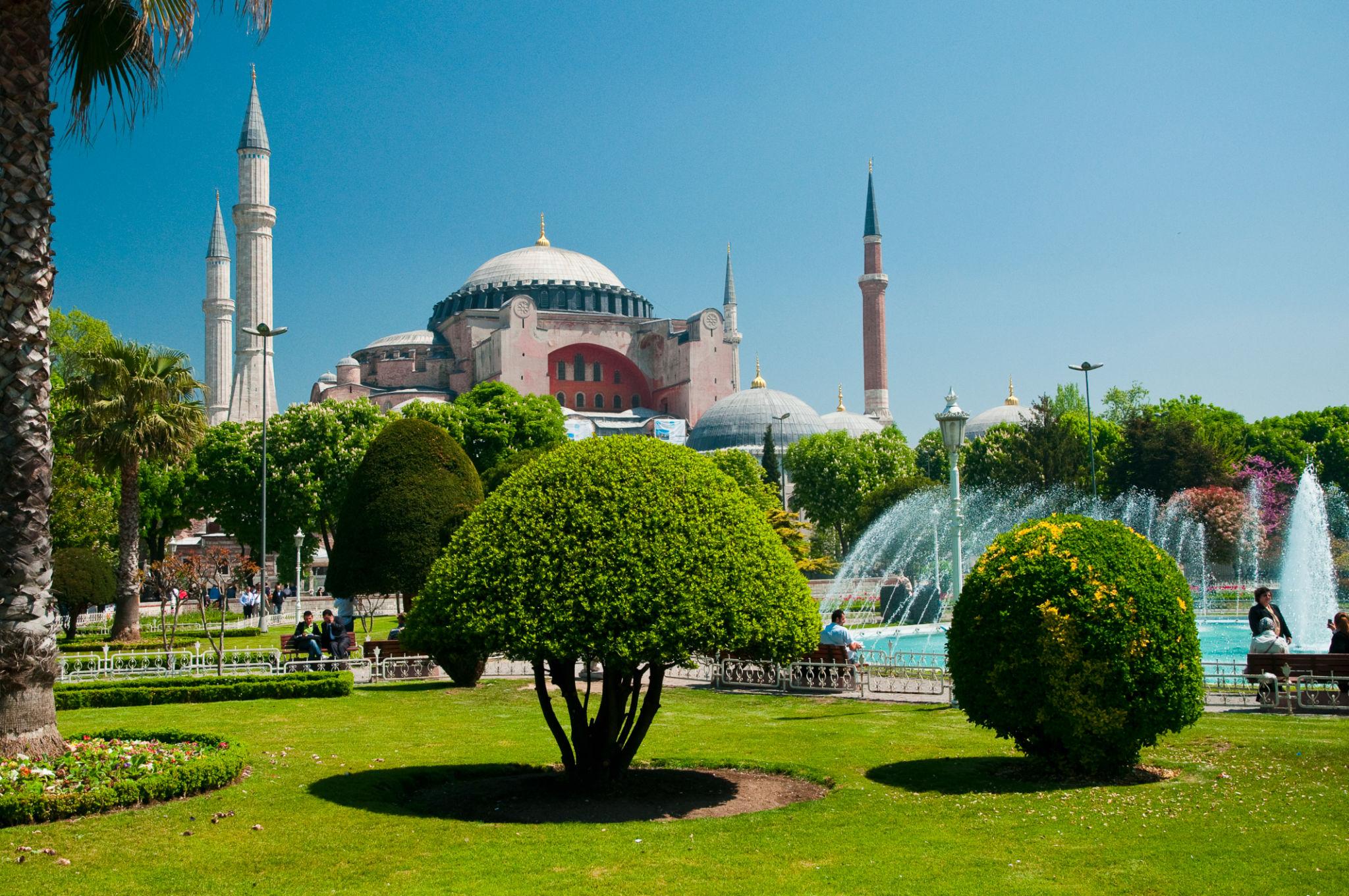
Hagia Sophia is a monumental mosque and architectural masterpiece in Istanbul, Turkey. Originally built as a Byzantine cathedral in 537 CE, it has served as an imperial church, an Ottoman mosque, a museum, and again a functioning mosque since 2020. Its vast dome and layered history make it one of the world’s most iconic sacred spaces. Built on Constantinople’s acropolis, Hagia Sophia was the Byzantine Empire’s principal cathedral for 900 years, famed as the seat of the Patriarch of Constantinople. After Sultan Mehmed II the Conqueror captured the city in 1453, it became a mosque, gaining minarets, a mihrab and minbar. In 1935 it was secularized as a museum under Mustafa Kemal Atatürk; its status reverted to mosque in 2020. Hagia Sophia embodies nearly 1,500 years of Christian and Islamic heritage. For centuries it was the largest church in Christendom and later a symbol of Ottoman imperial piety. Today it functions as a mosque open to worship and visitors, its Byzantine and Islamic elements coexisting as a testament to cultural continuity across empires.
The Blue Mosque is a historic Ottoman imperial mosque in Istanbul’s Sultanahmet district. Completed in 1616, it remains both an active place of worship and one of the world’s most visited architectural landmarks, celebrated for its six minarets, cascading domes, and vivid blue İznik tiles. Architect Sedefkâr Mehmed Ağa, a pupil of Mimar Sinan, combined Byzantine influences from Hagia Sophia with classical Ottoman forms. The central dome spans about 23.5 m across and rises 43 m high, supported by four massive “elephant-foot” pillars and surrounded by eight semi-domes. Entry is free, though donations aid preservation. Visitors remove shoes, dress modestly, and avoid entry during prayer times. The main visitor gate faces Sultanahmet Park, within walking distance of Topkapı Palace and Basilica Cistern. Restoration projects ensure the 400-year-old sanctuary remains luminous, serene, and central to Istanbul’s skyline.
 🎈 Take A Hot Air Balloon In Cappadocia
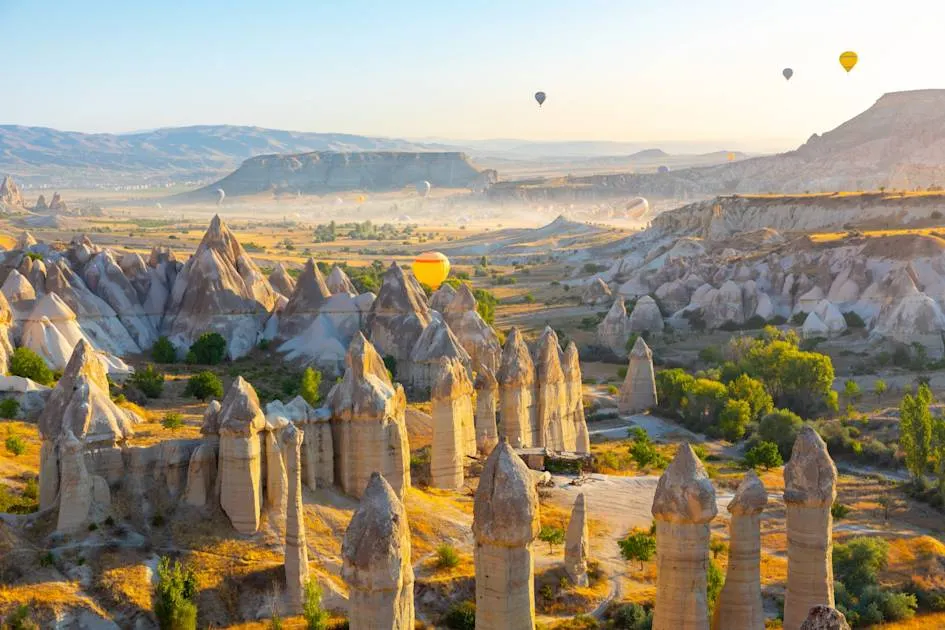
Cappadocia is a historical region in central Turkey, celebrated for its surreal volcanic landscapes, ancient cave dwellings, and deep cultural history. Formed by the erosion of soft tuff rock, it features distinctive “fairy chimneys” and a network of underground cities. Today it is one of Turkey’s most popular destinations for history, geology, and hot air balloon tourism. Cappadocia lies between the cities of Nevşehir, Kayseri, Aksaray, and Niğde. Its terrain was shaped millions of years ago by eruptions from ancient volcanoes such as Mount Erciyes and Mount Hasan. Over time, erosion sculpted cones, pillars, and canyons. The soft rock made it easy for ancient peoples to carve homes, churches, and monasteries directly into the stone. Cappadocia is a cornerstone of Turkey’s tourism economy. Visitors flock to Göreme National Park for its open-air museums and to experience sunrise hot air balloon rides over the valleys. Preservation efforts focus on protecting both the fragile geological formations and the rock-cut heritage sites from erosion and over-tourism.