
Travel to Croatia

 4 photos
Croatia is a country located in Southeastern Europe along the Adriatic Sea. It is situated on the Balkan Peninsula and shares borders with Slovenia, Hungary, Serbia, Bosnia and Herzegovina, and Montenegro. Croatia covers an area of approximately 56,600 square kilometers and has a population of about 3.8 million people. The country is famous for its beautiful coastline, historic cities, and rich cultural heritage.
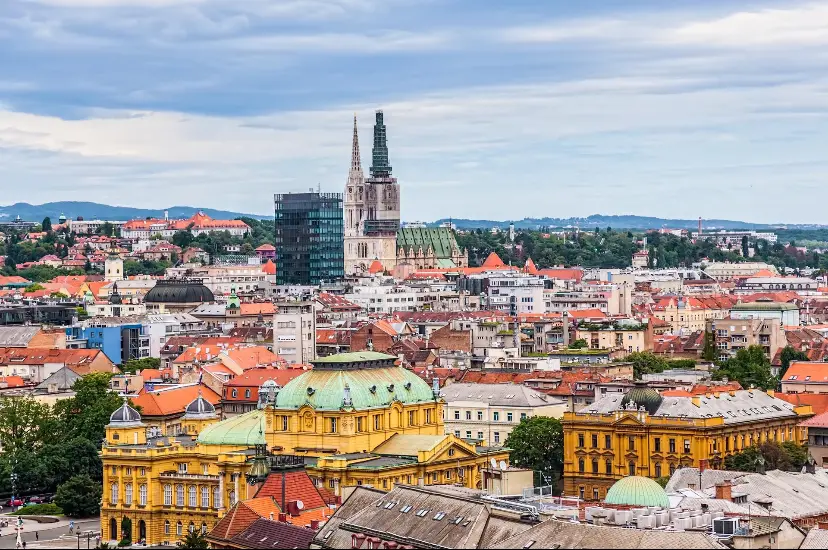
The capital and largest city of Croatia is Zagreb. Located in the northern part of the country, Zagreb is the political, economic, and cultural center. The city is known for its museums, parks, vibrant cafés, and historic architecture. Other major cities include Split, an important port city with ancient Roman ruins; Rijeka, a major industrial and maritime center; and Dubrovnik, one of the country’s most popular tourist destinations.
Croatia has one of Europe’s most beautiful coastlines, stretching over 1,700 kilometers along the Adriatic Sea and featuring more than 1,000 islands, although only a small number are permanently inhabited. The country is also known for its diverse landscapes, which include mountains, forests, rivers, and lakes. One of its most famous natural attractions is Plitvice Lakes National Park, a UNESCO World Heritage Site known for its cascading waterfalls and turquoise lakes.
The official language of Croatia is Croatian, and the majority of the population follows Roman Catholicism. Croatian culture has been shaped by influences from Central Europe, the Mediterranean, and the Balkans. Traditional music, dance, literature, and cuisine remain important parts of everyday life. Popular Croatian dishes include seafood specialties, grilled meats, and pastries that vary by region.
Croatia has a long and fascinating history. The area was inhabited by ancient peoples before becoming part of the Roman Empire. In the Middle Ages, Croatia became an independent kingdom before later entering a union with Hungary. Over the centuries, different parts of the country came under the influence of the Ottoman Empire and the Austro-Hungarian Empire.
After the First World War, Croatia became part of the Kingdom of Yugoslavia and later the Socialist Federal Republic of Yugoslavia. In 1991, Croatia declared independence, leading to the Croatian War of Independence. The conflict ended in 1995, and the country began rebuilding and developing rapidly.
Today, Croatia has a modern and diversified economy based on tourism, manufacturing, agriculture, and services. Tourism is especially important, with millions of visitors arriving each year to explore the country’s beaches, islands, and historic sites. Croatia joined the European Union in 2013 and continues to strengthen its position within Europe.
With its stunning natural beauty, rich history, and welcoming culture, Croatia is one of the most attractive and visited countries in Europe. Its unique blend of ancient traditions and modern development makes it a fascinating destination and an important nation in the Balkan region.