
Travel to Greece


 4 photos
Traveling to Greece feels like stepping into a place where beauty comes naturally. It’s not something that needs to be created or exaggerated. It’s already there in the landscapes, the architecture, and the way life flows from one moment to the next. From the mainland to the islands, Greece offers a kind of calm and clarity that makes it easy to settle in and enjoy your surroundings.
For many travelers, Greece begins in Athens, a city that carries the weight of history while still feeling active and alive. Walking through Athens, you’ll notice how ancient landmarks exist alongside modern life. The Acropolis stands as a reminder of the country’s deep historical roots, while the city around it continues to move forward with energy and purpose.
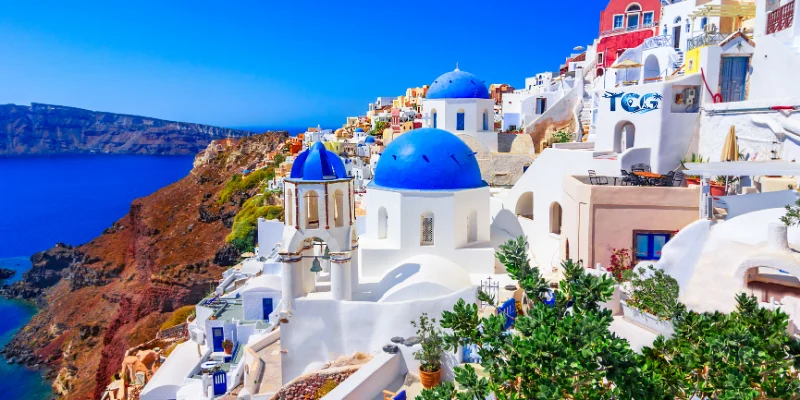
Beyond Athens, the Greek islands are what truly define the experience for many visitors. Places like Santorini are known for their unique architecture, with white buildings and blue domes overlooking the sea. The views feel almost unreal, especially at sunset, when the entire landscape changes color and creates moments that stay with you long after you’ve left.
Mykonos offers a different atmosphere, more social, more energetic, and known for its nightlife and beach lifestyle. It’s a place where relaxation during the day naturally transitions into activity in the evening, giving travelers a balanced experience.
What makes Greece special is how simple everything feels. Life moves at a slower pace, and there’s an emphasis on enjoying the present moment. Whether you’re sitting by the water, walking through a quiet street, or sharing a meal, there’s a sense of ease that shapes the entire journey.
The coastline is one of Greece’s strongest features. Clear waters, scenic cliffs, and open views create an environment that feels both peaceful and visually striking. It’s the kind of setting where you don’t feel rushed, you simply take it in.
Food is also a central part of the experience. Greek cuisine is fresh, straightforward, and deeply connected to local ingredients. Meals are often shared, and there’s a strong sense of connection that comes with dining. Whether it’s seafood by the coast or traditional dishes in a small local restaurant, the food adds depth to the journey.
Traveling between destinations in Greece is part of the experience itself. Ferries connect many of the islands, offering a chance to see the country from a different perspective. This makes it possible to explore multiple locations within one trip, each offering its own atmosphere.
The people in Greece contribute greatly to the overall experience. There’s a natural friendliness and openness that makes visitors feel welcome. Conversations feel easy, and there’s often a willingness to help, guide, or simply share a moment.
Greece also adapts well to different types of travelers. It can be romantic, relaxing, adventurous, or social depending on how you plan your trip. Whether you’re visiting for a quiet getaway, a honeymoon, or an active exploration, there’s something that fits your style.
In many ways, Greece offers a kind of travel that feels effortless. It doesn’t overwhelm you, it invites you. It gives you space to enjoy, to slow down, and to experience each moment without pressure.
For travelers looking for a destination that combines history, scenery, food, and a relaxed lifestyle, Greece remains one of the most naturally inviting places to visit.
Hotels in Greece
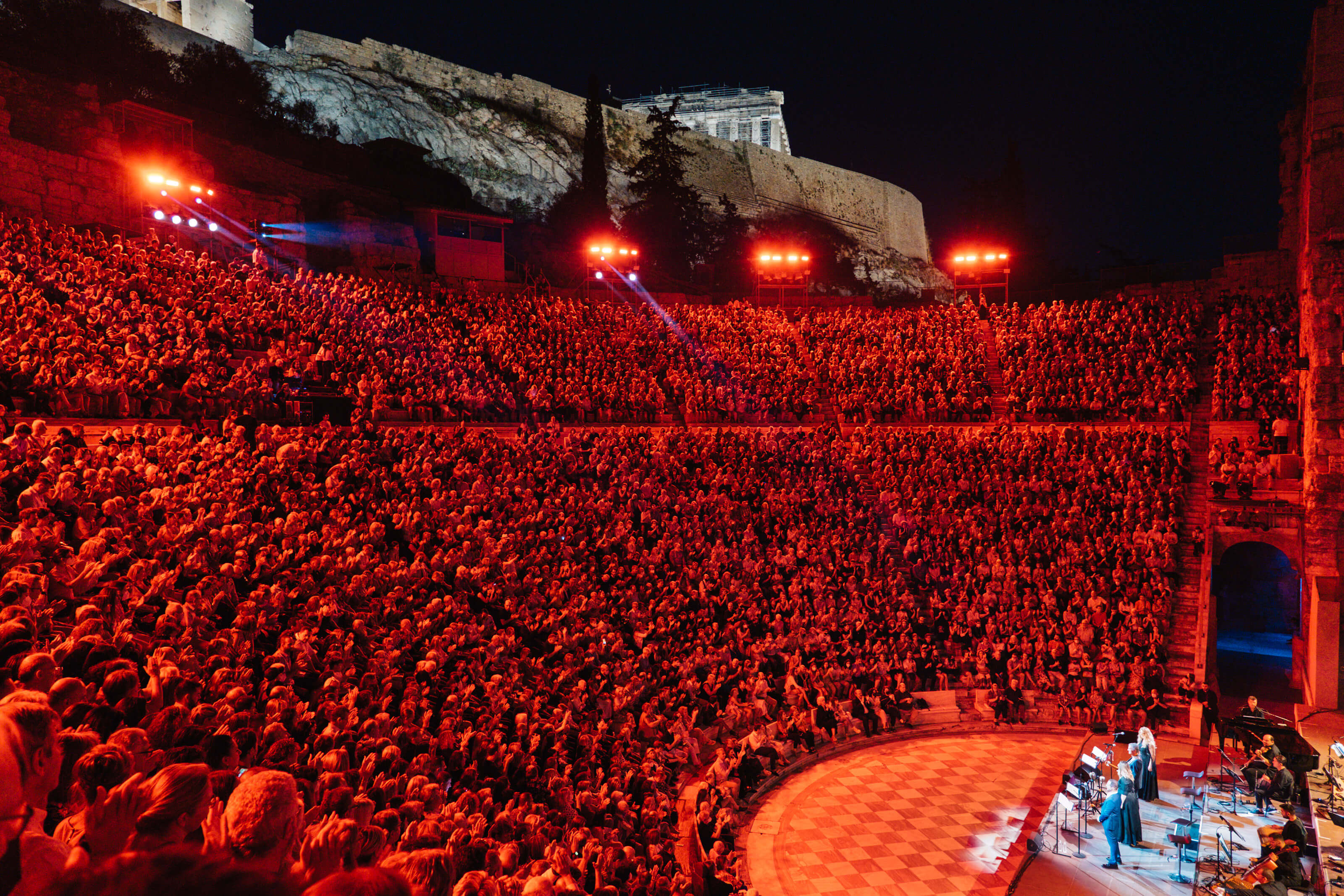 Catch a live performance at the Odeon of Herodes Atticus
The Odeon of Herodes Atticus is a stone amphitheater built in 161 CE on the southwest slope of the Acropolis of Athens. It remains one of Greece’s most celebrated ancient performance venues, renowned for its excellent acoustics and dramatic setting beneath the Parthenon. Commissioned by the wealthy Athenian Roman senator Herodes Atticus, the odeon served both as a memorial and a civic cultural site. Originally roofed with a wooden cedar dome, it was among the finest covered theaters in the Roman world. The building later fell into disuse after being damaged during invasions in the 3rd century CE. The semicircular theater was designed with three tiers of seating, a marble-paved orchestra, and an imposing three-story stone façade. The stage building once supported intricate decorative elements and statues, blending Roman engineering with Greek aesthetic principles. Its acoustic precision still allows unamplified performances to reach all seats.
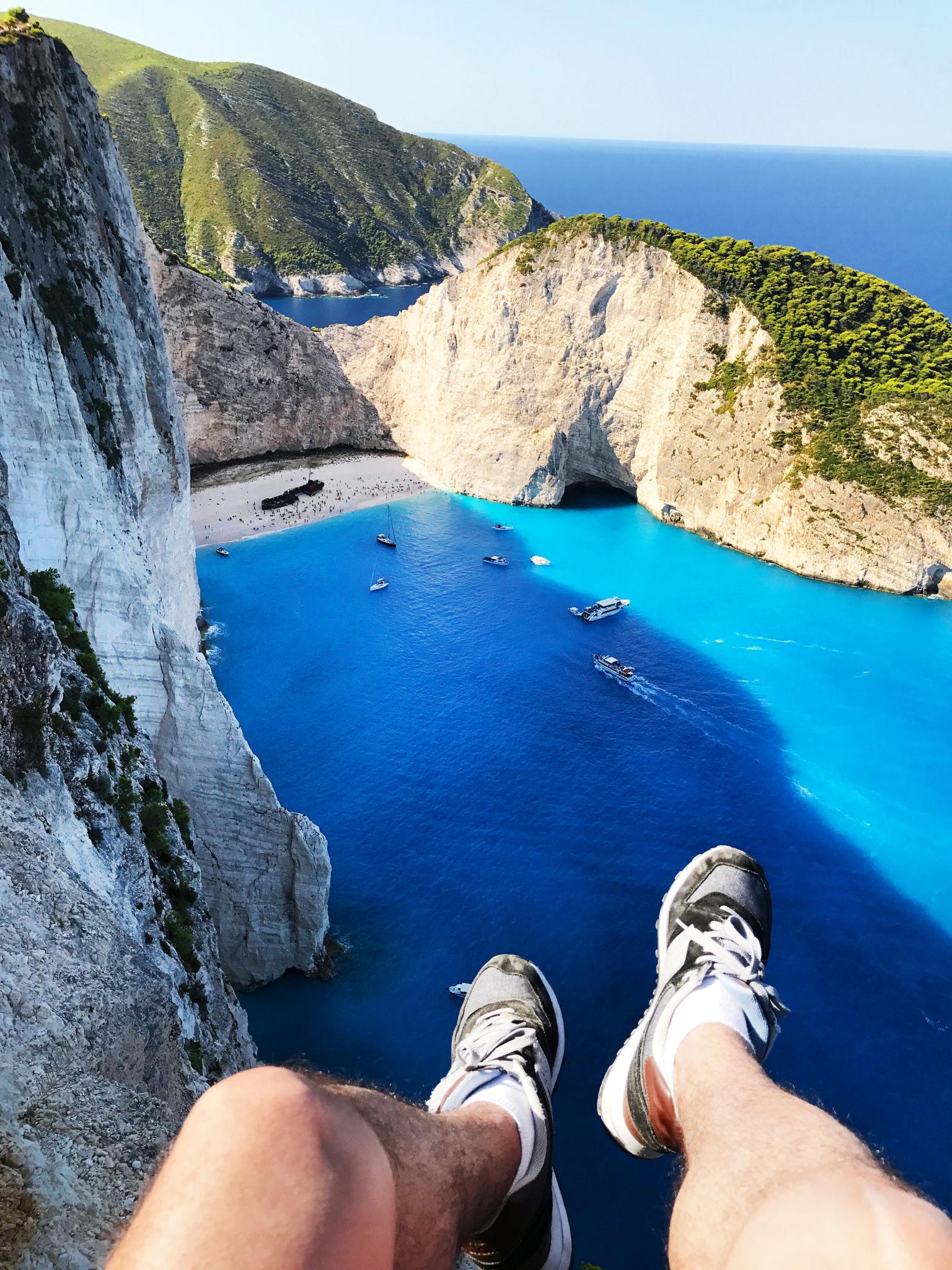 Swim at Navagio Beach (the famous shipwreck beach)
Navagio Beach, also known as Shipwreck Beach, is a secluded cove on the northwestern coast of Zakynthos Island, Greece. Enclosed by towering limestone cliffs and accessible only by sea, it is famed for its turquoise waters and the rusting remains of the MV Panagiotis shipwreck, making it one of the most photographed sites in the Ionian Islands and all of Greece. Originally called Agios Georgios Beach, the site gained fame after the 1980 grounding of the Panagiotis, allegedly pursued by the Greek Navy while smuggling cigarettes. Locals later salvaged its cargo, and the abandoned hull became an accidental monument. Whether caused by crime or storm, the wreck transformed a remote bay into Zakynthos’s emblematic image. Travelers can reach Navagio only by boat tours from Porto Vromi, Agios Nikolaos, or Zakynthos Town. While disembarkation is currently restricted, sightseeing vessels may enter the bay. The clifftop viewpoint near the village of Anafonitria offers the iconic panoramic “postcard” shot; access involves a short walk from a parking area and should be approached cautiously due to unstable ground
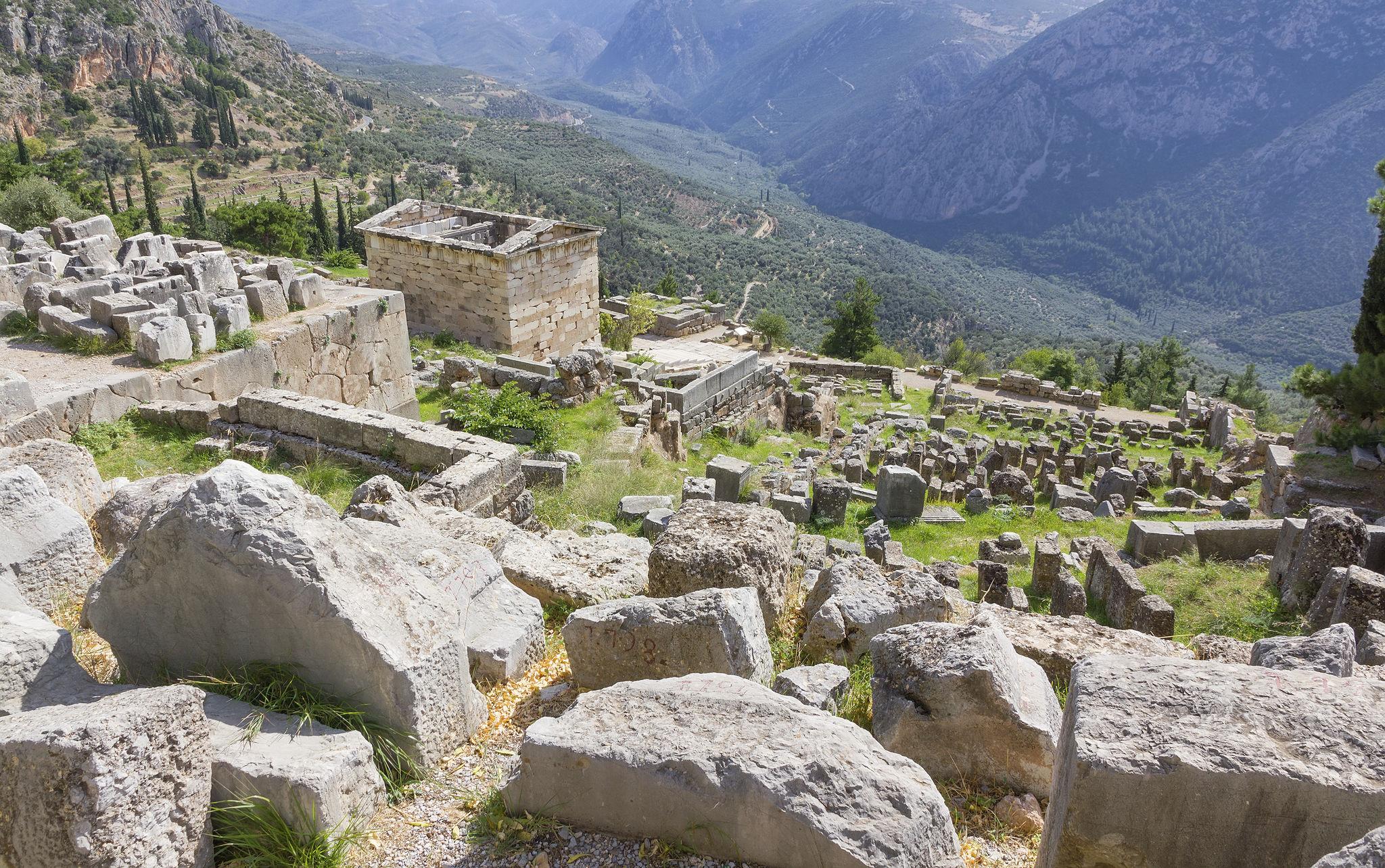 Explore Delphi
Delphi was an ancient sanctuary and religious center located on the slopes of Mount Parnassus in central Greece. Revered as the site of the oracle of the god Apollo, it was considered the spiritual heart of the Greek world and a major center for prophecy, pilgrimage, and the worship of Apollo. Delphi’s architecture reflects both religious devotion and civic display. The Temple of Apollo dominated the sanctuary, surrounded by treasuries built by various city-states to house offerings and showcase wealth. A sacred way led visitors past these structures to the temple, while a large theater and stadium hosted the Pythian Games, combining athletic and musical contests in honor of Apollo. Delphi’s influence waned after the Roman conquest and the spread of Christianity, leading to the oracle’s closure under Emperor Theodosius I in the 4th century CE. Excavations beginning in the 19th century uncovered its monumental ruins, and today Delphi remains a key archaeological site and symbol of ancient Greek spirituality and wisdom.
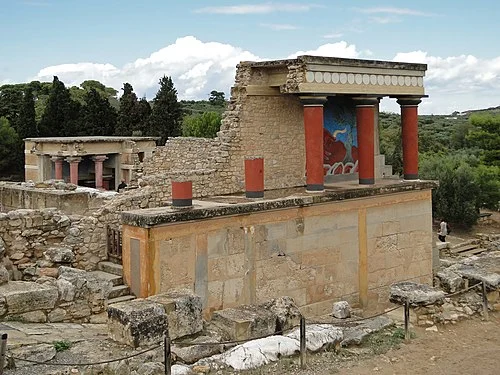 Visit The Knossos Palace
The Palace of Knossos is the largest Bronze Age archaeological site on Greece’s island of Crete. Located about 5 km southeast of Heraklion, it was the ceremonial and political center of the Minoan civilization. The multilevel complex is famed for its vivid frescoes, intricate layout, and links to Greek myth, notably King Minos and the Minotaur’s Labyrinth. The palace comprised more than 1 000 rooms surrounding a central court, connected by corridors and staircases. Key areas include the Throne Room with a gypsum seat flanked by griffin frescoes, the Queen’s Megaron adorned with the Dolphin fresco, and vast storage magazines holding clay pithoi for oil and grain.Knossos Palace remains a defining symbol of Europe’s earliest advanced civilization and a cornerstone for Aegean archaeology, art history, and the enduring mythology of ancient Crete.
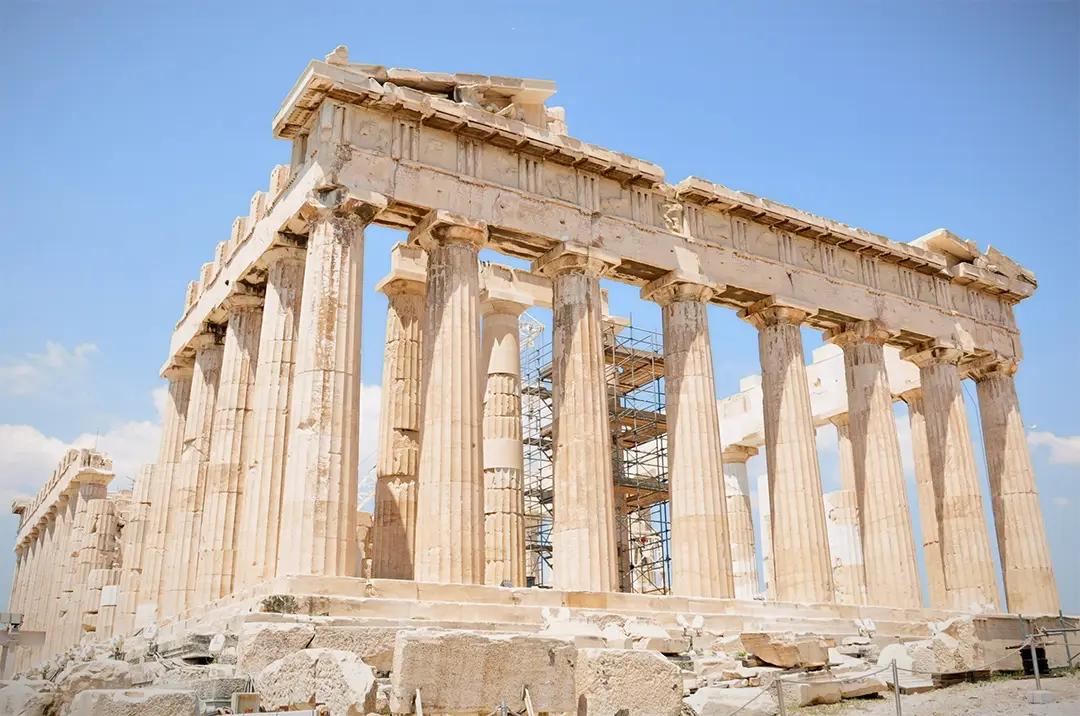 Wander The Acropolis of Athens
The Acropolis of Athens is an ancient citadel located on a rocky hill above Athens, Greece. It contains several iconic structures from the 5th century BCE that exemplify Classical Greek architecture and artistic achievement. The site symbolizes the cultural and political power of ancient Athens and remains a global emblem of democracy and Western civilization. Extensive restoration began in the 19th century and continues today under the Acropolis Restoration Service to stabilize and conserve its marble structures. The site attracts millions of visitors annually and remains one of the most important archaeological destinations in the world. Throughout history, the Acropolis has served as a fortress, religious center, and cultural landmark. Its monuments have influenced architecture worldwide and continue to symbolize ideals of democracy, philosophy, and artistic excellence associated with Classical Greece.