
Travel to Romania


 4 photos
Romania is a country located in Southeastern Europe, at the crossroads of Central and Eastern Europe. It shares borders with Ukraine to the north, Moldova to the northeast, Bulgaria to the south, Serbia to the southwest, and Hungary to the west. It also has a coastline along the Black Sea. Covering about 238,000 square kilometers, Romania has a population of around 19 million people.
The capital city is Bucharest, the largest city in the country and its main political, economic, and cultural center. Bucharest is known for its wide boulevards, historic buildings, communist-era architecture, and modern business districts. It is often called the “Little Paris” due to its elegant architecture and vibrant cultural life.
Romania has a long and complex history shaped by many civilizations. In ancient times, the region was inhabited by the Dacians before becoming part of the Roman Empire, which influenced the country’s name and language. During the medieval period, the principalities of Wallachia, Moldavia, and Transylvania developed as separate regions, often influenced by the Ottoman Empire, the Habsburgs, and other European powers.
In 1859, Wallachia and Moldavia united to form the basis of modern Romania, and full independence was achieved in 1877. After World War I, Transylvania and other territories joined Romania, creating the modern national borders. During the 20th century, Romania experienced monarchy, fascist influence during World War II, and later a communist regime under Nicolae Ceaușescu until the 1989 revolution restored democracy.
Today, Romania is a democratic republic with a semi-presidential system. It is a member of the European Union and the NATO. Since joining these organizations, Romania has strengthened its economy and international relationships.
The Romanian economy is diverse, with important sectors including IT, agriculture, automotive manufacturing, energy, and services. In recent years, Romania has become a growing hub for technology and outsourcing, especially in cities like Bucharest, Cluj-Napoca, and Timișoara. Agriculture remains important due to fertile plains that produce wheat, corn, and sunflower crops.
Romania is also known for its rich culture and traditions. The official language is Romanian, a Romance language derived from Latin, making it closely related to Italian, French, and Spanish. Folk music, dance, and traditional clothing remain important in rural areas. Romanian cuisine includes dishes such as sarmale (cabbage rolls) and mămăligă (cornmeal porridge).
The country’s landscape is very diverse. The Carpathian Mountains stretch across the center, offering hiking, skiing, and wildlife such as bears and wolves. The Danube River forms part of Romania’s southern border and flows into the Danube Delta, one of Europe’s most important wetlands and biodiversity hotspots.
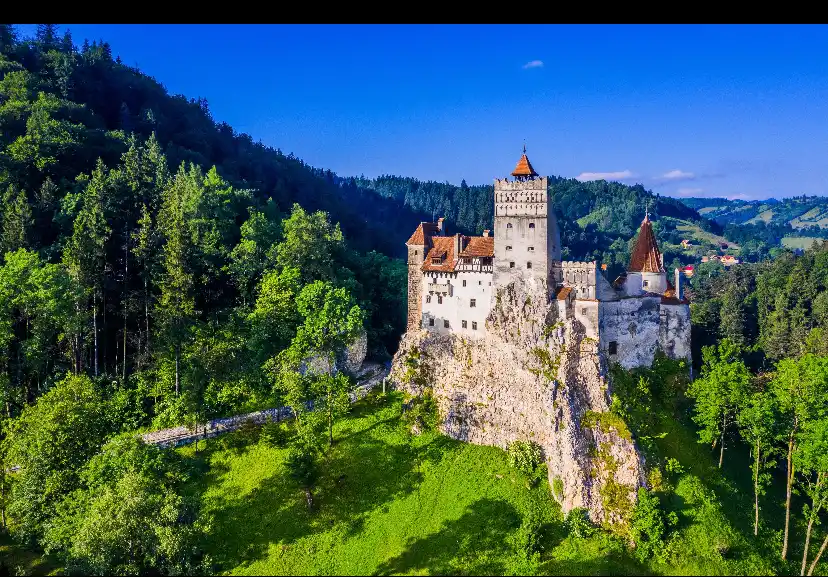
Tourism is growing steadily. Visitors are drawn to historic sites like Bran Castle, often associated with the Dracula legend, as well as medieval cities like Sibiu and Brașov. The country’s combination of mountains, castles, and historic towns makes it a unique destination in Europe.
In conclusion, Romania is a country with deep historical roots, diverse landscapes, and a rapidly developing modern economy. From the mountains of Transylvania to the Black Sea coast, Romania offers a blend of natural beauty, cultural richness, and historical significance that continues to shape its identity today.