
Travel to Slovenia

 4 photos
Slovenia is a small but highly scenic country located in Central Europe, where the Alps meet the Mediterranean and the Balkans. It shares borders with Italy to the west, Austria to the north, Hungary to the northeast, and Croatia to the south and southeast. Despite its small size of about 20,000 square kilometers, Slovenia is known for its natural beauty, high quality of life, and strong environmental protection.
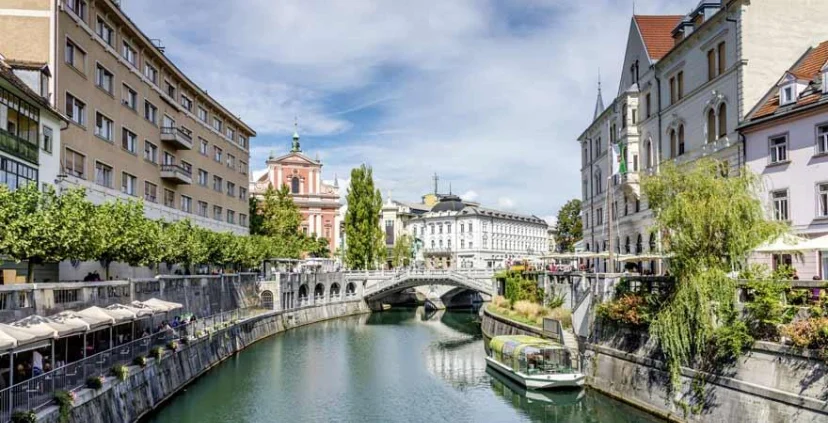
The capital city is Ljubljana, a charming and green city located along the Ljubljanica River. Ljubljana is known for its pedestrian-friendly center, historic architecture, bridges designed by architect Jože Plečnik, and lively cultural atmosphere. It serves as the political, economic, and educational heart of the country.
Slovenia has a rich and diverse history. In ancient times, the region was part of the Roman Empire. Later, it came under the influence of various medieval states and eventually became part of the Habsburg Monarchy for several centuries. After World War I, Slovenia became part of the Kingdom of Serbs, Croats, and Slovenes, later known as Yugoslavia. Following the breakup of Yugoslavia, Slovenia declared independence in 1991 after a brief conflict known as the Ten-Day War.
Today, Slovenia is a parliamentary republic and a member of the European Union, the NATO, and the eurozone. It is widely regarded as one of the most stable and developed countries in Central and Eastern Europe, with a strong focus on sustainability and environmental conservation.
The Slovenian economy is advanced and export-oriented. Key industries include automotive parts, pharmaceuticals, electronics, tourism, and manufacturing. Slovenia benefits from its strategic location between Western Europe and the Balkans, making it an important transport and trade corridor. The country also has a highly educated workforce and a strong emphasis on innovation.
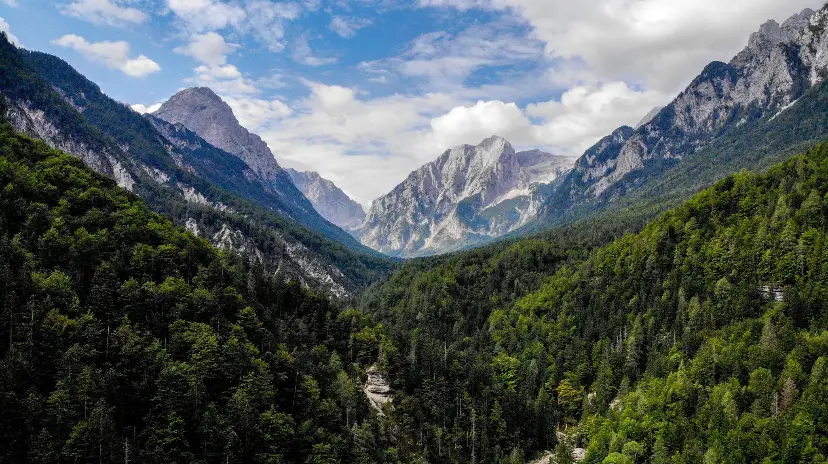
One of Slovenia’s greatest strengths is its natural environment. Around half of the country is covered in forests, making it one of the greenest countries in Europe. The Julian Alps dominate the northwest, with Triglav National Park protecting much of this mountainous region. Mount Triglav is the highest peak and a national symbol.
Slovenia is also famous for its lakes, caves, and coastline. Lake Bled is one of the most iconic destinations, known for its island church and medieval castle overlooking the water. The country is also home to the spectacular Postojna Cave, one of the largest cave systems in Europe. Along the short Adriatic coastline, towns like Piran offer Venetian-style architecture and seaside charm.
Slovenian culture reflects a mix of Slavic, Germanic, and Italian influences. The official language is Slovene, and the population is largely ethnically homogeneous, though regional diversity exists. Traditional music, folk costumes, and festivals remain important in rural areas, while modern arts and cultural events thrive in cities.
Outdoor activities are central to Slovenian life. Hiking, skiing, cycling, and kayaking are popular due to the country’s varied terrain. Sustainability and environmental awareness are deeply embedded in national policy and everyday habits.
In conclusion, Slovenia is a small but exceptionally beautiful country with mountains, lakes, caves, and a charming coastline. Combined with a strong economy, stable governance, and rich cultural heritage, Slovenia stands out as one of Europe’s most attractive and livable nations.