
Travel to Sweden


 4 photos
Sweden is a Scandinavian country located in Northern Europe, known for its high quality of life, advanced welfare system, and vast natural landscapes. It shares land borders with Norway to the west and Finland to the northeast, while the Baltic Sea lies to its south and east. Sweden covers an area of about 450,000 square kilometers, making it one of the largest countries in Europe by land area, though its population is relatively small at around 10.5 million people.
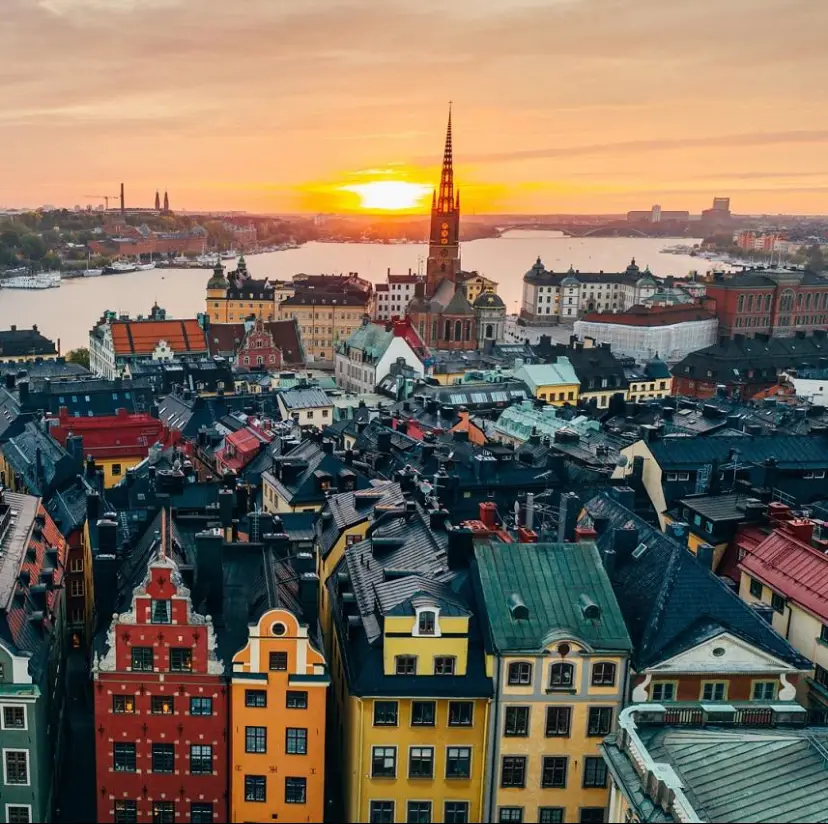
The capital city is Stockholm, which is built on 14 islands connected by bridges. Stockholm is known for its beautiful waterfront views, historic old town called Gamla Stan, modern architecture, and strong cultural institutions. It is also the political, financial, and technological center of Sweden, hosting government offices, major companies, and internationally recognized universities.
Sweden has a long and influential history. During the 17th century, it became a major European power during the Swedish Empire era, controlling parts of the Baltic region and influencing Northern European politics. Over time, Sweden shifted toward neutrality and avoided involvement in major wars in the modern era. This policy of neutrality, especially during the 20th century, helped Sweden focus on internal development, social reform, and economic growth.
Today, Sweden is a constitutional monarchy with a parliamentary democracy. The monarch serves a ceremonial role, while elected representatives govern the country. Sweden is widely known for its stable political system, strong institutions, and emphasis on equality and social welfare. It is also a member of the European Union, although it does not use the euro currency, instead continuing with the Swedish krona.
The Swedish economy is highly developed and export-oriented. Major industries include technology, automotive manufacturing, pharmaceuticals, telecommunications, and renewable energy. Global companies such as Volvo, Ericsson, and IKEA originated in Sweden, reflecting its strong tradition of innovation and design. The country is also known for its startup ecosystem, particularly in cities like Stockholm, which has produced several globally successful tech companies.
Sweden’s geography is diverse and heavily shaped by nature. The northern region, known as Swedish Lapland, features forests, mountains, and Arctic landscapes where the northern lights can be seen during winter. Central Sweden is dominated by forests and lakes, while the south has more agricultural land and densely populated cities. The country is also famous for its “right of public access,” which allows people to freely explore nature responsibly.
Tourism in Sweden is driven by both nature and culture. Visitors explore the archipelago around Stockholm, the coastal city of Gothenburg, and the historic university city of Uppsala. The Icehotel in northern Sweden, rebuilt each winter from ice and snow, is another unique attraction.
Swedish culture emphasizes simplicity, sustainability, and design. Concepts like “fika,” a coffee break with pastries, are an important part of daily life. The country is also known for its contributions to music, literature, and environmental innovation. English is widely spoken, alongside Swedish, the official language.
In conclusion, Sweden is a modern, innovative, and nature-rich country that balances advanced technology with environmental awareness and strong social values. From the islands of Stockholm to the forests of the north, Sweden offers a unique combination of urban sophistication and natural beauty that defines its identity.