
Travel to Nicaragua
 4 photos
Nicaragua is the largest country in Central America by land area, located between Honduras to the north and Costa Rica to the south. It has coastlines on both the Pacific Ocean and the Caribbean Sea, giving it a wide range of ecosystems, from volcanic landscapes and tropical rainforests to lakes and beaches. Nicaragua is known for its dramatic geography, colonial cities, and rich Indigenous heritage.
The capital city is Managua, located on the southwestern shore of Lake Managua. It is the political and administrative center of the country and the largest urban area. Managua has grown rapidly over time, especially after a major earthquake in 1972 that destroyed much of the old city. Today, it features a mix of modern government buildings, commercial zones, and rebuilt residential areas, though its layout is more spread out than many traditional Latin American capitals.
Nicaragua has a long history shaped by Indigenous civilizations, Spanish colonization, and political change. Before European arrival, the region was inhabited by various Indigenous groups such as the Nicarao people. The Spanish colonized the area in the 16th century, incorporating it into the Captaincy General of Guatemala. Nicaragua gained independence in 1821 along with much of Central America.
In the 20th century, Nicaragua experienced political instability, including decades under the Somoza family dictatorship and a major revolution led by the Sandinista movement in 1979. These events strongly influenced the country’s modern political and social systems.
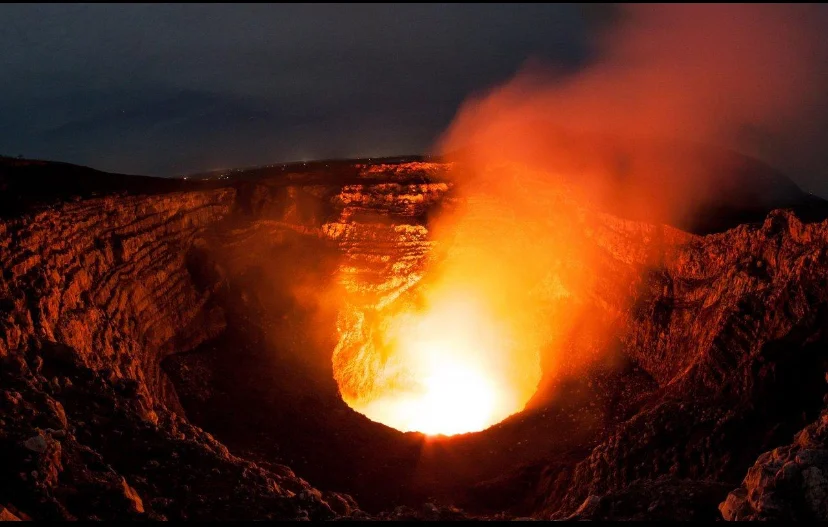
One of Nicaragua’s most important natural features is its volcanic landscape. The country has more than 20 volcanoes, many of them active. Volcanoes such as Masaya and Concepción are popular for tourism and scientific study. Masaya Volcano is especially famous because visitors can sometimes see glowing lava inside its crater, making it one of the few places in the world where this is easily accessible.
Another major natural attraction is Lake Nicaragua (Lake Cocibolca), one of the largest freshwater lakes in the Americas. It is home to unique wildlife, including freshwater sharks, and contains islands such as Ometepe, which is formed by two volcanoes rising from the lake. Ometepe Island is a major eco-tourism destination known for hiking, wildlife, and cultural heritage.
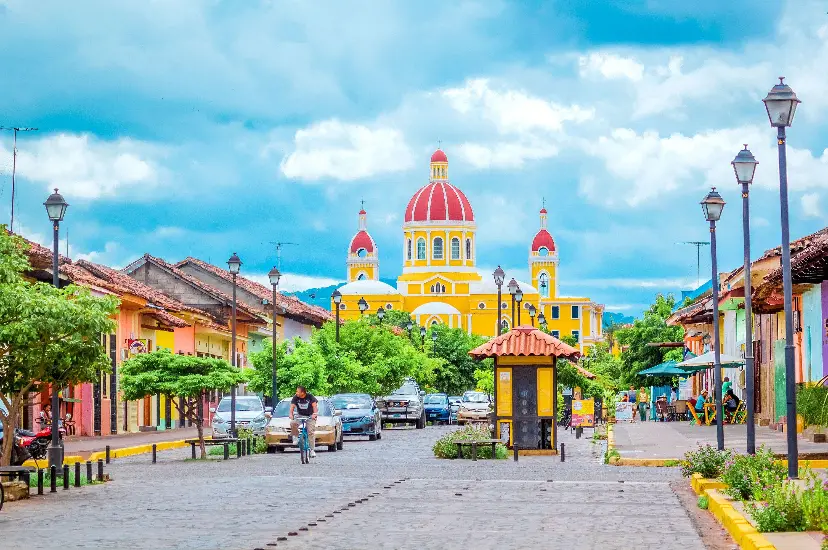
Tourism is an increasingly important part of Nicaragua’s economy. Visitors are attracted to colonial cities like Granada and León, which feature colorful architecture, churches, and historic streets. Granada is especially known for its well-preserved Spanish colonial buildings and its location near Lake Nicaragua. León is a cultural and intellectual center with a strong revolutionary history and impressive cathedrals.
Agriculture also plays a major role in the economy. Key exports include coffee, beef, sugar, peanuts, and tobacco. Coffee grown in Nicaragua’s highlands is particularly valued for its quality. Many rural communities depend on farming and small-scale agriculture for their livelihoods.
Nicaraguan culture is a blend of Indigenous, Spanish, and Afro-Caribbean influences. Music and dance are important in daily life, with traditional styles such as marimba music and modern Latin genres widely enjoyed. Festivals, religious celebrations, and local fairs are common throughout the year. The cuisine includes dishes such as gallo pinto (rice and beans), nacatamales, and fried plantains.