
Travel to Saint Kitts and Nevis
 4 photos
Saint Kitts and Nevis is a small two-island country located in the eastern Caribbean Sea. It is the smallest sovereign nation in the Western Hemisphere in both area and population. The country consists of the larger island of Saint Kitts and the smaller island of Nevis, separated by a narrow channel called The Narrows. Despite its size, it has a strong historical legacy, beautiful landscapes, and a growing tourism economy.
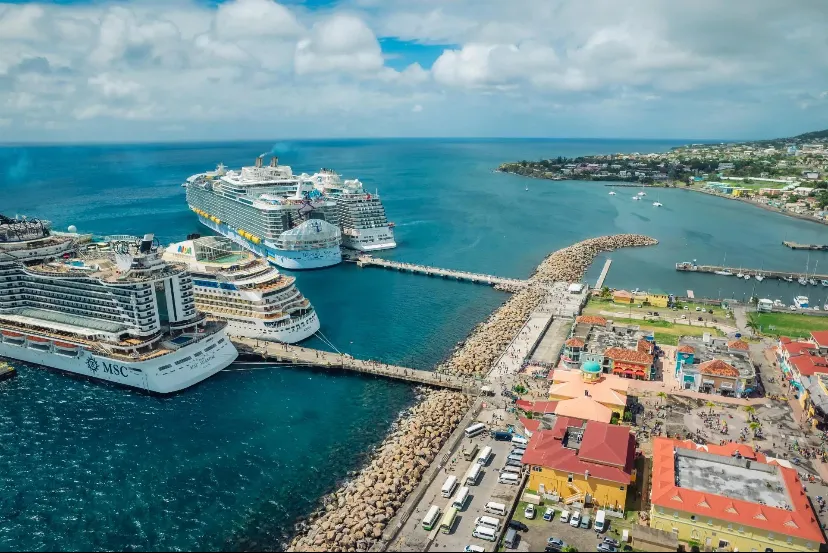
The capital city is Basseterre, located on the southwest coast of Saint Kitts. Basseterre is the main port and economic center of the country. It is known for its colonial architecture, lively port area, and the historic Circus Square, modeled after London’s Piccadilly Circus. The city serves as a key stop for cruise ships in the Caribbean, making tourism an important part of local life.
The history of Saint Kitts and Nevis is closely tied to European colonization and the plantation economy. Before Europeans arrived, the islands were inhabited by Indigenous peoples, including the Kalinago. Christopher Columbus is believed to have visited Saint Kitts in 1493 during his second voyage to the Americas. The British later established settlements in the 17th century, and the islands became one of the earliest British colonies in the Caribbean. Sugar plantations were developed, relying heavily on enslaved African labor, which has had a lasting impact on the population and culture.
Saint Kitts and Nevis gained independence from the United Kingdom on September 19, 1983, making it one of the youngest independent countries in the Americas. It remains a member of the Commonwealth, with a parliamentary democracy and a constitutional monarchy.
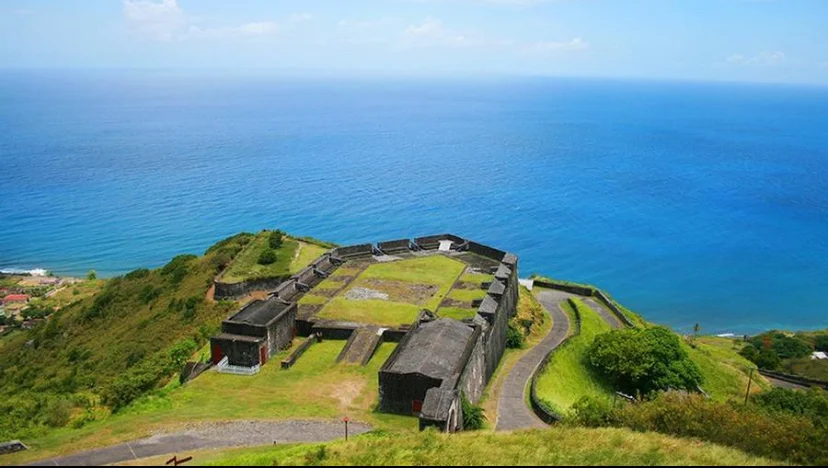
One of the most important historical landmarks is Brimstone Hill Fortress, a UNESCO World Heritage Site. Known as the “Gibraltar of the West Indies,” it was built by the British in the 17th and 18th centuries to defend the island. Today, it is one of the best-preserved fortresses in the Caribbean and a major tourist attraction.
The economy of Saint Kitts and Nevis has shifted significantly over time. In the past, sugar production was the main industry, but it declined in the early 2000s. Today, tourism, financial services, and real estate are the primary economic drivers. The islands are known for luxury resorts, cruise tourism, and eco-tourism experiences such as hiking, rainforest tours, and beach activities.
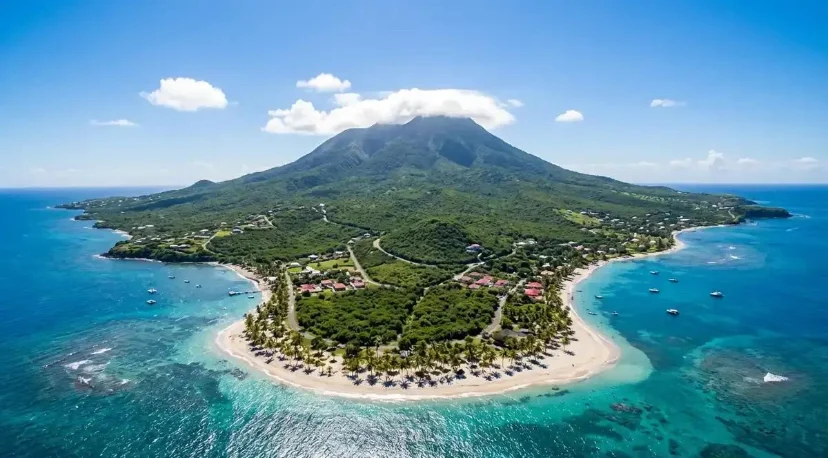
Nevis, the smaller island, is known for its relaxed atmosphere and natural beauty. Its capital, Charlestown, features charming colonial buildings and a quiet coastal setting. Nevis is also famous for its hot springs, historical plantations, and views of Nevis Peak, a dormant volcano that rises dramatically from the island’s center.
Saint Kitts offers more mountainous terrain, with lush rainforests and hiking trails, especially around Mount Liamuiga, another dormant volcano. The island is popular for adventure tourism, including rainforest hikes, zip-lining, and scenic railway tours that follow old sugar plantation routes.
The culture of Saint Kitts and Nevis is a vibrant blend of African, European, and Caribbean influences. Music genres such as calypso, soca, and reggae are widely enjoyed. The annual Carnival celebration, known as “Sugar Mas,” is one of the country’s biggest cultural events, featuring parades, costumes, music, and street dancing.
Today, Saint Kitts and Nevis is known for its political stability, natural beauty, and welcoming atmosphere. Its combination of volcanic landscapes, historical sites, and Caribbean culture makes it a distinctive and important part of the Caribbean region