
Travel to Kiribati


 4 photos
Kiribati is a small island nation located in the central Pacific Ocean, part of the region of Oceania. It is one of the most geographically dispersed countries in the world, consisting of 33 atolls and reef islands spread across a vast area of ocean. These islands are grouped into three main island chains: the Gilbert Islands, the Phoenix Islands, and the Line Islands. Kiribati straddles the equator and even crosses the International Date Line, making it one of the first countries in the world to experience each new day.
The country has a population of around 120,000 people, most of whom live on the main island of Tarawa in the Gilbert Islands. The capital city is South Tarawa, which is a densely populated strip of land made up of several connected islets. South Tarawa is the political, economic, and administrative center of the country, and it contains government offices, schools, hospitals, and the main port.
Kiribati has a long history of settlement by Micronesian peoples who arrived thousands of years ago. These early inhabitants developed strong traditions of fishing, navigation, and community living in a challenging environment with limited land and resources. European contact began in the 19th century when traders, missionaries, and explorers arrived in the islands. Later, Kiribati became part of the British Empire as the Gilbert and Ellice Islands Colony.
In 1979, Kiribati gained independence from the United Kingdom and became a sovereign nation. Since independence, it has faced unique challenges due to its small land area, isolation, and vulnerability to environmental changes. Kiribati is a member of the Commonwealth of Nations and maintains diplomatic relations with many countries despite its small size.
The economy of Kiribati is small and limited by geography. It relies heavily on fishing, especially tuna fishing licenses granted to foreign fleets, as well as remittances from citizens working abroad. Copra (dried coconut) production is another traditional source of income. Government revenue is also supported by international aid and a sovereign wealth fund known as the Revenue Equalization Reserve Fund.
Because of its isolation, Kiribati imports most manufactured goods, fuel, and food products. Transportation between islands is difficult and expensive, relying on ships and limited air services. This makes logistics and infrastructure development a constant challenge for the country.
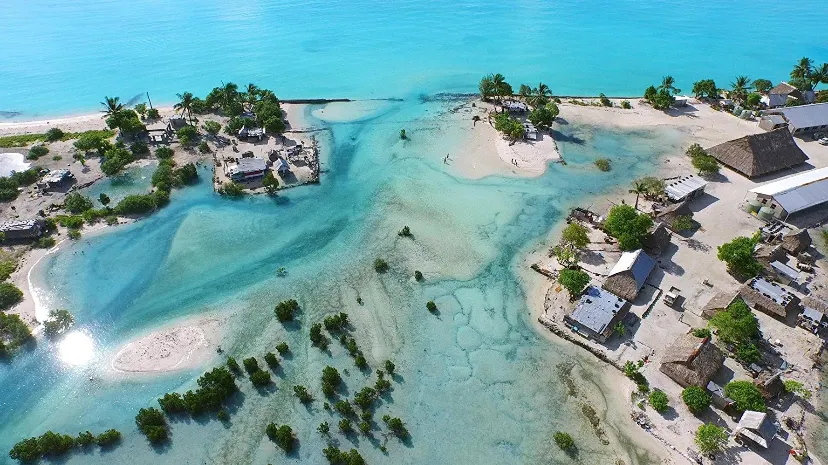
Kiribati’s geography is unique and striking. The islands are coral atolls surrounded by large lagoons and coral reefs. The land is generally flat, sandy, and covered with coconut palms and small vegetation. Freshwater is scarce and usually comes from rainwater collection or underground lenses, which are easily affected by pollution and seawater intrusion.
Despite its challenges, Kiribati has a rich cultural heritage. The local people, known as I-Kiribati, speak Gilbertese (also called Kiribati language) and English, which is used in government and education. Traditional culture emphasizes community cooperation, respect for elders, and strong family ties. Music, dance, and storytelling play important roles in celebrations and ceremonies.
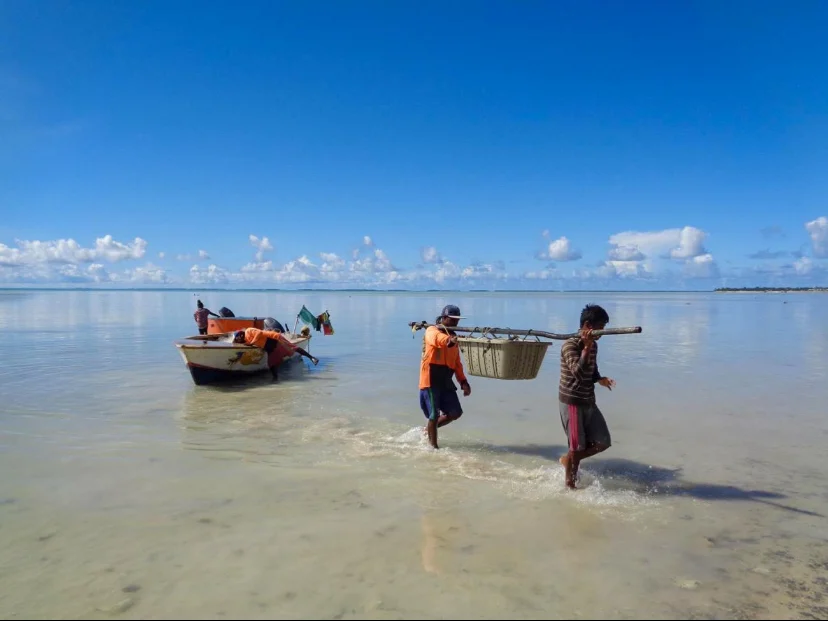
Fishing is central to everyday life and culture. Traditional fishing methods are still practiced alongside modern techniques, and the ocean is deeply respected as both a food source and a cultural identity. Canoe navigation and ocean knowledge have historically been essential skills for survival across the scattered islands.
Education and healthcare services are limited but improving, with support from international partners. Schools are mainly concentrated in South Tarawa, while outer islands often have smaller facilities. The government continues to work on improving infrastructure, climate resilience, and economic opportunities.
In conclusion, Kiribati is a unique and fragile island nation defined by its vast ocean territory, scattered atolls, and deep cultural traditions. While it faces serious environmental and economic challenges, especially from climate change, it remains a resilient country with a strong sense of identity and community across its widely dispersed islands.