
Travel to Samoa

 3 photos
Samoa is a small island country located in the central South Pacific Ocean, within the region of Polynesia. It is made up of two main islands, Upolu and Savai’i, along with several smaller islands. Although it is not large in size or population, Samoa has a strong cultural identity, a deep connection to tradition, and a natural environment filled with tropical beauty. The country is located east of Fiji and north of Tonga, sitting in a part of the world known for scattered island nations and rich ocean life.
The capital city of Samoa is Apia, which is found on the island of Upolu. Apia is the main center for government, business, and trade in the country. Most of Samoa’s population lives on Upolu, where infrastructure and services are more developed compared to the more rural island of Savai’i. The total population of Samoa is relatively small, with just over 200,000 people, and most of them are of indigenous Samoan heritage.
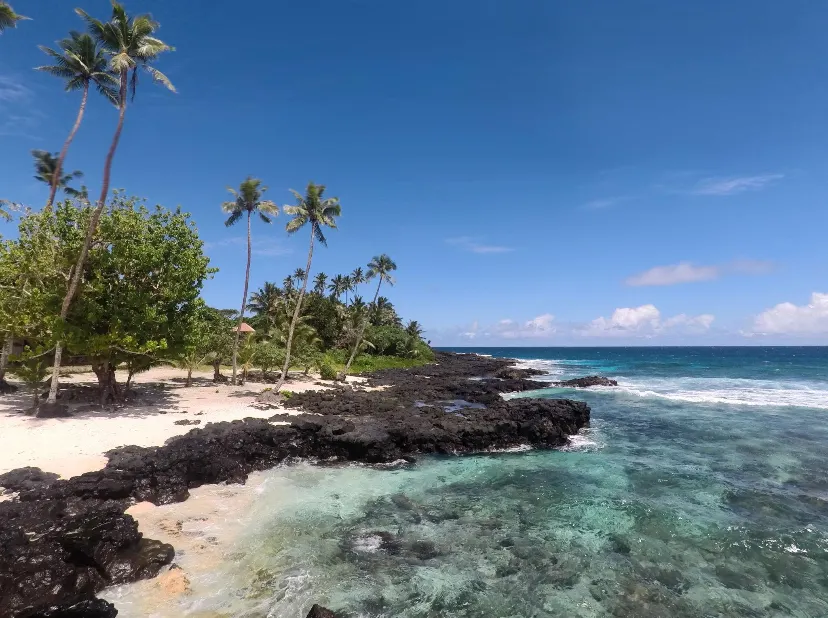
Samoa’s natural environment is one of its greatest strengths. The islands are volcanic in origin, which means the landscape includes mountains, lush forests, waterfalls, and fertile soil. The coastline is surrounded by coral reefs and clear blue waters, making it ideal for fishing and tourism. Inland areas are often covered in dense vegetation, and many villages are located close to the coast. The country’s warm tropical climate supports year-round plant growth and contributes to its rich biodiversity.
The culture of Samoa is one of the oldest and most well-preserved in the Pacific. Traditional customs, known as Fa’a Samoa (the Samoan way), play a major role in everyday life. This includes respect for family, elders, and community leaders. Extended families often live together in close-knit village systems, and decisions are frequently made collectively. Traditional chiefs, known as matai, hold important leadership roles in villages and help maintain order and cultural practices.
Language is also an important part of Samoan identity. The Samoan language is widely spoken throughout the country, alongside English, which is used in education and government. Oral storytelling, music, and dance are essential cultural traditions. The Siva dance and traditional drumming are often performed during celebrations, festivals, and important events, reflecting the country’s strong artistic heritage.
Samoa’s economy is mainly based on agriculture, fishing, tourism, and remittances from Samoans living abroad. Many families grow crops such as taro, coconut, bananas, and cocoa. The fishing industry also plays a key role in supporting local communities. Tourism has become increasingly important, with visitors attracted to Samoa’s beaches, waterfalls, cultural villages, and relaxed lifestyle.
Historically, Samoa has experienced influences from several foreign powers, including Germany, New Zealand, and the United States. It gained independence in 1962, becoming one of the first Pacific island nations to do so. Since then, it has maintained a stable government and continues to develop its economy while preserving its traditions.
Today, Samoa faces challenges such as climate change, rising sea levels, and economic vulnerability due to its small size and remote location. However, the country continues to adapt by strengthening environmental protection, promoting sustainable tourism, and supporting community-based development.
Samoa is a nation where tradition and nature remain deeply connected. Its strong cultural values, beautiful landscapes, and close community life make it one of the most distinctive and respected island countries in the Pacific.