
Travel to Tuvalu

 3 photos
Tuvalu is a small island nation located in the central Pacific Ocean, positioned roughly halfway between Australia and Hawaii. It is part of the Polynesian subregion of Oceania and is made up of nine small islands, most of which are low-lying atolls. Because of its size and remote location, Tuvalu is one of the least populated and least visited countries in the world. Despite this, it has a strong cultural identity and a close-knit society where community life plays a central role.
The capital of Tuvalu is Funafuti, which is also the country’s largest atoll. Funafuti contains the majority of the population and serves as the administrative and economic center. Government offices, schools, and most essential services are located here. Outside Funafuti, life is much quieter, with small villages spread across the remaining islands, each maintaining traditional ways of living.
Tuvalu has a population of roughly 11,000 people, making it one of the smallest nations in the world by population. The people are primarily of Polynesian descent, and social life is strongly based on family and community ties. Extended families often live in close proximity, and cooperation among villagers is an important part of everyday life.
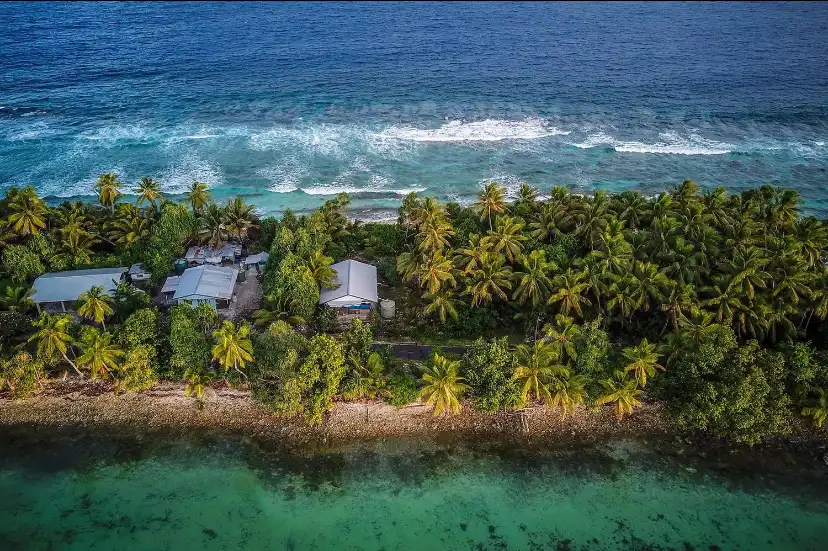
Geographically, Tuvalu is extremely low-lying, with most land only a few meters above sea level. The islands are formed from coral atolls, meaning they are flat and surrounded by lagoons and reef systems rather than mountains or hills. This geography makes Tuvalu especially beautiful, with clear turquoise waters, white sandy beaches, and rich marine life. However, it also makes the country extremely vulnerable to rising sea levels, coastal erosion, and storm surges.
The climate in Tuvalu is tropical, with warm temperatures throughout the year and high humidity. Rainfall is common, and there is no distinct dry season. While the weather supports lush vegetation such as coconut palms and pandanus trees, it also contributes to challenges like freshwater scarcity. Rainwater is a crucial resource, as there are no major rivers or natural freshwater sources on the islands.
Culturally, Tuvalu has a strong Polynesian heritage that remains deeply embedded in daily life. Traditional music, dance, and storytelling are important forms of expression and are often performed during community gatherings and celebrations. The culture places a strong emphasis on respect, cooperation, and shared responsibility among community members.
The Tuvaluan language is widely spoken throughout the country, while English is used in government, education, and official communication. Many people are bilingual, which helps maintain both local traditions and international connections.
The economy of Tuvalu is small and limited due to its size and isolation. Main sources of income include fishing, government employment, foreign aid, and money sent home by Tuvaluans living abroad. The country also earns revenue from licensing its internet domain name “.tv,” which is used globally for television and media-related websites. Subsistence living is common, with many families relying on fishing and small-scale agriculture for food.
Tuvalu faces serious environmental challenges, especially due to climate change. Rising sea levels pose a direct threat to its very existence, as much of the land is only slightly above sea level. This has made Tuvalu one of the most vocal countries in international climate discussions, advocating for global action to reduce emissions and protect vulnerable island nations.
Despite its challenges, Tuvalu remains a strong and culturally rich nation. Its people maintain a deep connection to land, ocean, and tradition, and continue to preserve their identity in the face of environmental uncertainty.